Translate

Showing posts with label Hoisin sauce. Show all posts

Friday, July 14, 2017

Creating a New Appetizer for a Wine Tasting

Smoky flavor, Beef, Currant, Empanadas
Smoky Beef & Currant Empanadas
At each year's event to benefit the Boys and Girls Club of Aberdeen, there is an auction held for a wine tasting for 20 to 25 people, to be held in the winning bidder's home - with appetizers by A Harmony of Flavors (that's me!). This year, the people that won the auction are holding their wine and food tasting on August 4th, so it's right around the corner.

Two things I planned to make, just because they are scrumptious, and because they easily pair with certain types of wine, are my Smoky Beef & Currant Empanadas and Chicken & Raisin Samosas.  The Empanadas were originally served with an Argentine Malbec, but they will also pair nicely with a
Chicken, Raisin, Samosas, appetizers, finger food
Chicken & Raisin Samosas
full bodied Cabernet, which will likely be served at this upcoming home wine tasting. The Chicken and Raisin Samosas originally paired with a Conundrum White, which was a blend of Sauvignon Blanc, Chardonnay, Viognier, Semillon and Muscat Canelli. With or without the chicken (some at this upcoming wine tasting may be vegetarian, so I try to have something for everyone), they will pair with Chardonnay or possibly a Sauvignon Blanc, if it's not too much on the tart side. 


Spanakopita Cups for Sauvignon Blanc

So, I had something to go with a strong red and something to go with a rounder, buttery white like Chardonnay. Next, I thought about the more austere whites, like Sauvignon Blanc and opted to use the Spanakopita Cups, since spinach and Feta cheese are both things that will pair with that white wine. My original Spanakopita recipe is for the spinach/feta mixture to be rolled, flag-like, in phyllo dough. In
Spanakopita, fillo cups
Spanakopita Cups
order to simplify while still using phyllo, I used frozen phyllo cups. Making the filling mixture just the same, I then filled two packages worth (30 in all) of phyllo cups with the mixture, then set the cups onto a baking sheet in the center of a preheated 375-degree oven for about 12 minutes, until the filling is set and the phyllo cups are golden. Click the link for my Spanakopita Cups.


But then, what could I make to pair with a softer red, like a Pinot Noir or maybe a fruity Zinfandel or Merlot? I never know what wines the wine representative will bring to these tastings, so I try and prepare for most possible options. I thought about blackberries, because I had just bought a bunch of them, and thinking maybe making something like a chutney of sorts would go nicely with pork. But then, what to do with the pork? 
Hoisin sauce, Pork, Blackberry, Chutney
Hoisin Pork with Blackberry Chutney

Many years ago, for an impromptu wine tasting I held for family, my sister brought a pork tenderloin, that her husband would grill just before we sat down to taste and pair. I asked, since the pork was supremely tasty, just what was the marinade? She said she was almost embarrassed to say it, but all she did was dump a small jar of Hoisin sauce onto the tenderloin and marinate for 24 hours. At another time, she commented that she had started the marinating with Hoisin, but then didn't get to use it right away, so it marinated for at least 2 days. And - it was even better! Grilling will take a little while, depending on how thick or large your pork tenderloin might be. When I made it a few days ago, I also tied cotton twine around the tenderloin, in order for it to stay as round as possible, so the slices would be nice and round. It took about 25 minutes to grill it to doneness.

Hoisin Pork with Blackberry Chutney

Hoisin sauce, Pork, Blackberry, Chutney
Hoisin Pork with Blackberry Chutney

pork tenderloin(s)
1 jar Hoisin sauce
Baguette, sliced thinly
olive oil, for brushing
Blackberry Chutney, recipe below
Chevre cheese, optional

Marinate the pork tenderloin in Hoisin Sauce for 2 days, then grill it. Once grilled to at least 155 degrees, tent it with foil for 10 minutes, then slice it thinly, getting something like 25 to 30 usable slices (I'm making 2 tenderloins for the event). Slice a baguette thinly and set the slices in a single layer, close together on a baking sheet. Brush the tops with olive oil, then broil just until they start to look toasted. Set a slice of tenderloin on each piece of baguette, and then top with a small dollop of Blackberry Chutney. For an alternate method, whip together 2 tablespoons of the Blackberry Chutney with 2 ounces of Chevre cheese, until smooth. This mixture can be used instead of the chutney on its own, or alternately make some with each, for a pretty presentation.


Back to the Blackberry Chutney

I wasn't totally sure how the Hoisin marinated tenderloin would go with a blackberry chutney, but I figured I'd never know till I tried, so I went ahead and made the chutney. And it was mighty good! It would be good on pork of any kind. When preparing to create the recipe, I thought about the flavor profile I wanted: tart, with the blackberries, tart apple and vinegar, a little bit of sweet with some currants and palm sugar, rosemary and juniper for an herbaceous note, some serrano chilies and black pepper for heat. Sounded good to me, so I started preparing. And it was superb!

The apple I used was cooked with the skin and seeds left in. This is to help release pectin into the mixture so the chutney would set up thick. It is really best if you own a food mill to puree this mixture, as it can be quite tedious trying to pass this through a strainer.


Blackberry Chutney
Blackberry Chutney

Blackberry Chutney

Makes about 1 cup

1¼ cups fresh blackberries (133 g / 4.7 ounces)
¼ Granny Smith Apple, skin & seeds intact

Cook these first two ingredients with a tiny amount of water to get them started, until they are very soft and tender, 20 or so minutes. Pass the mixture through a food mill, preferably, to remove most seeds and the apple skin and seeds. Discard the seeds and skins and set the puree aside until needed.

1 teaspoon olive oil
½ medium red onion (123 g / 4.35 ounces), finely chopped
1 clove garlic, minced
2 tablespoons of palm sugar or brown sugar
2 tablespoons red wine vinegar
1 teaspoon finely minced rosemary leaves
5 juniper berries
1 small Serrano chili, minced
¼ teaspoon black pepper
1 tablespoon currants (or raisins, chopped)
1 tablespoon balsamic vinegar

In a medium saucepan heat the olive oil and sauté the onion and garlic until very soft and translucent. Add the palm sugar, wine vinegar, rosemary, juniper berries (in cheesecloth for easy removal later), Serrano chili, black pepper, and currants. Stir to dissolve sugar and blend flavors. Add the pureed fruit to the saucepan and cook over low heat for about 15 minutes, or until the mixture is thickened. Add the balsamic vinegar and stir in for another 2 minutes. Pour into a clean glass jar and seal tightly. Keep refrigerated until needed. Should keep for at least a week or so.


My passion is teaching people how to create a harmony of flavors with their cooking, and passing along my love and joy of food, both simple or exotic, plain or fancy. I continue my journey in ethnic and domestic cuisines, continuing my journey to explore diverse culinary experiences and hopefully to start you on a journey of your own. Join me also at A Harmony of Flavors on Facebook, and Pinterest.

Thursday, February 19, 2015

Flank Steak Rolls a Hit at Wine Tasting

host, gathering, foods, wine and food pairing
Host, Ty, at left: gathering around the foods
Last evening an informal wine tasting was held at the lovely home of Ty and Ann Hanson. I made a few appetizers to contribute to the foods. I have to say I had more fun last evening than I have in a long while. The circle of friends attending were all lovely and convivial. I had a few people who love cooking, and with whom to bounce ideas back and forth. My husband had someone to talk computer geek stuff. We both came away from the evening happy and grateful for such lovely people and such a lovely time. 

wines, wine tasting, wine selection
Michelle Podoll setting out the wines
I wrote about this upcoming event about 10 days ago, when I was doing a trial run of a couple of the recipes I was planning. My goal is always to pair foods with wines in a way that brings out the best in both. I had created the Lemon Thyme Chicken Fillo Cups to pair with a Ferarri Carano Chardonnay and also with a Pinot Noir. I am happy to report, after last evening's event, that this appetizer paired well with both these wines. The wines presented ranged from about $13 to $73 in price. There was a Cabernet Sauvignon from Spain, a Cabernet Sauvignon, Pinot Noir, two Zinfandels, a Rhone varietal blend and a Chardonnay from California, an Italian Chianti and a Sauvignon Blanc from New Zealand. 

Asiago, cream cheese, log shapes, filling
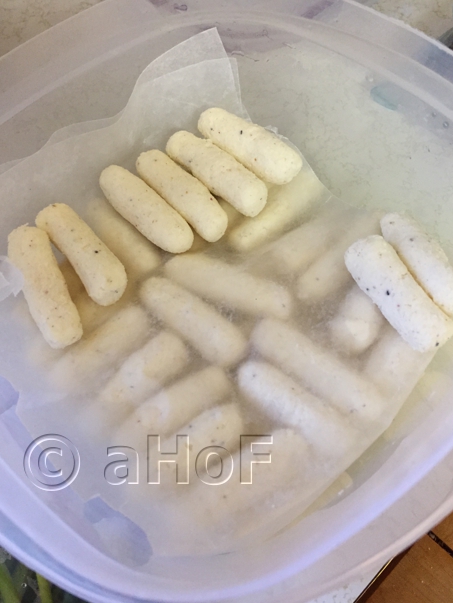
Asiago/cream cheese logs
The other appetizer I had made as a trial run on that same day needed a little modification. This second appetizer was Flank and Asiago Rolls. In the trial run I rolled a narrow rectangle of Asiago cheese with a sliver of scallion in the individual flank steak bites. The fact that Asiago will tend to crumble a bit meant that in some of the rolls, sticking the toothpick through the roll meant the cheese broke in half. Plus, the cheese was a bit overwhelming this way. My sister-in-law, who was there to taste these trial runs, suggested maybe grating the cheese and mixing with cream cheese. I thought this was a great idea. I wanted to keep the strength of flavor of the Asiago, being the component that would make it a good pairing with the strength of the Cabernet Sauvignons being served.

While prepping for the event of last evening, I did grate the Asiago cheese finely (using a small-holed grater (rendering thin strings much like the fresh grated Parmesan one finds in the grocery) and mix in just enough cream cheese to make the mixture form-able. I wanted to roll the cheese into narrow logs this time, making it easier to roll in the sliced meat segments. I ended up with 84 little logs, 6 to 7 grams, or .21 to .25 ounces each. I was completely happy because, as it turned out, I had only two thin bits of the flank steak left, after using the entire 84 cheese logs. Great eye for what was needed (as I pat myself on the back!).

Flank steak, Asiago Rolls, appetizer, finger foods
Flank & Asiago Rolls, served

How many appetizers this recipe will yield depends on how one slices the flank steak, and how accurately the little cheese logs are weighed. The cheese logs can easily vary widely, so I used a little scale to ensure they did not vary beyond 6 grams. I have sliced many flank steaks for similar type appetizers, so I have some practice, but it is not a difficult thing to do. There will be waste involved (which we are happy to devour!). Ends that are too thick and not long enough to make into a roll - there is no getting around the waste there. Some slices will end up thicker than others. Just keep slicing and thinking "thin".


Flank & Asiago Rolls


Makes about 80 to 85, approximately
Flank steak, Asiago Rolls, appetizer, finger foods
Flank & Asiago Rolls


MEAT:
2.3 pound flank steak
¼ cup Sweet Smoky Cocoa Rub
¼ cup olive oil
1½ teaspoon salt
1 teaspoon chipotle powder
6 - 8 cloves garlic, minced finely

CHEESE:
12 ounces Asiago cheese, grated finely
8 ounces cream cheese, softened
¼ cup Hoisin Sauce
scallions, slivered for rolling
toothpicks for skewering
Hostess, salad, prep, appetizer feast
The hostess, Ann, prepping salad
One or two days before, Combine the Sweet Smoky Cocoa Rub with the olive oil, salt, chipotle powder and garlic. Place the flank steak into a gallon sized zip-top bag. Take one half of the oil mixture and rub evenly onto the steak in the bag. Flip over the bag, and apply the remaining mixture evenly onto that second side of the steak. Seal the bag and place in the refrigerator for 1 or 2 days.

Up to 3 days in advance, prepare the cheese. Grate the Asiago finely, and using hands or a hand mixer, thoroughly combine with the cream cheese. It is best to use a scale or some implement to make all the cheese logs of equal size. Measure out a small amount. Six grams is plenty. Roll this into a log about 2 inches long. Repeat with the remaining mixture, setting the logs into a container as shown in the photo above. Set waxed paper between layers.

Have ready the scallions. If larger, slice lengthwise down the scallion, then cut this into lengths about 2 or so inches long. Store these in a zip-top baggie in the fridge if making the day before or earlier in the day.

The day before, or early on the day needed, preheat the broiler with the oven rack on the second level from the top. Set a rack onto a low rimmed baking sheet (cover the baking sheet with foil for easy cleanup later), set the steak on the rack and place under the broiler for approximately 6 minutes per side. Remove from oven and tent with foil until cooled. The meat can be sliced at this point, but there will be far more mess. If possible, once the meat is cooled, wrap and store in the refrigerator for at least 2 hours or overnight before slicing; once sliced, the slices can be stored one more night in the fridge.

Once ready to slice, begin at one end, cutting across the long grain of the meat. Set the knife at an angle away from you to get wider strips of meat. All that is vitally important is that all the slices be across the grain, ensuring tender meat. Slice the meat as thinly as possible. Once the meat is too wide for the knife to span easily, slice it into two sections lengthwise. Then, continue to slice off thin pieces until all the meat is used up. I used a 2.3 pound piece of flank to yield the 86 rolls. The slices of meat will need to be long enough to wrap around the cheese log and scallion sliver.

It takes about 40 minutes to make all the rolls. Set the Hoisin Sauce in a small bowl and have a pastry brush ready. Set the flank slices, cheese logs, scallions and toothpicks arrayed near you. Lay out a slice of meat and using the pastry brush, dab a small amount of Hoisin sauce on the slice. Set one cheese log and a sliver of scallion across the width of the meat and roll to encase. Skewer with a toothpick. Repeat with all the remaining meat. These should be eaten the day they are rolled as the scallions become soggy if kept too long.


My passion is teaching people how to create a harmony of flavors with their cooking, and passing along my love and joy of food, both simple or exotic, plain or fancy. I continue my journey in ethnic and domestic cuisines, continuing my journey to explore diverse culinary experiences and hopefully to start you on a journey of your own. Join me also at A Harmony of Flavors on Facebook, and Pinterest.

Disqus