Translate

Showing posts with label A Harmony of Flavors. Show all posts

Saturday, June 17, 2023

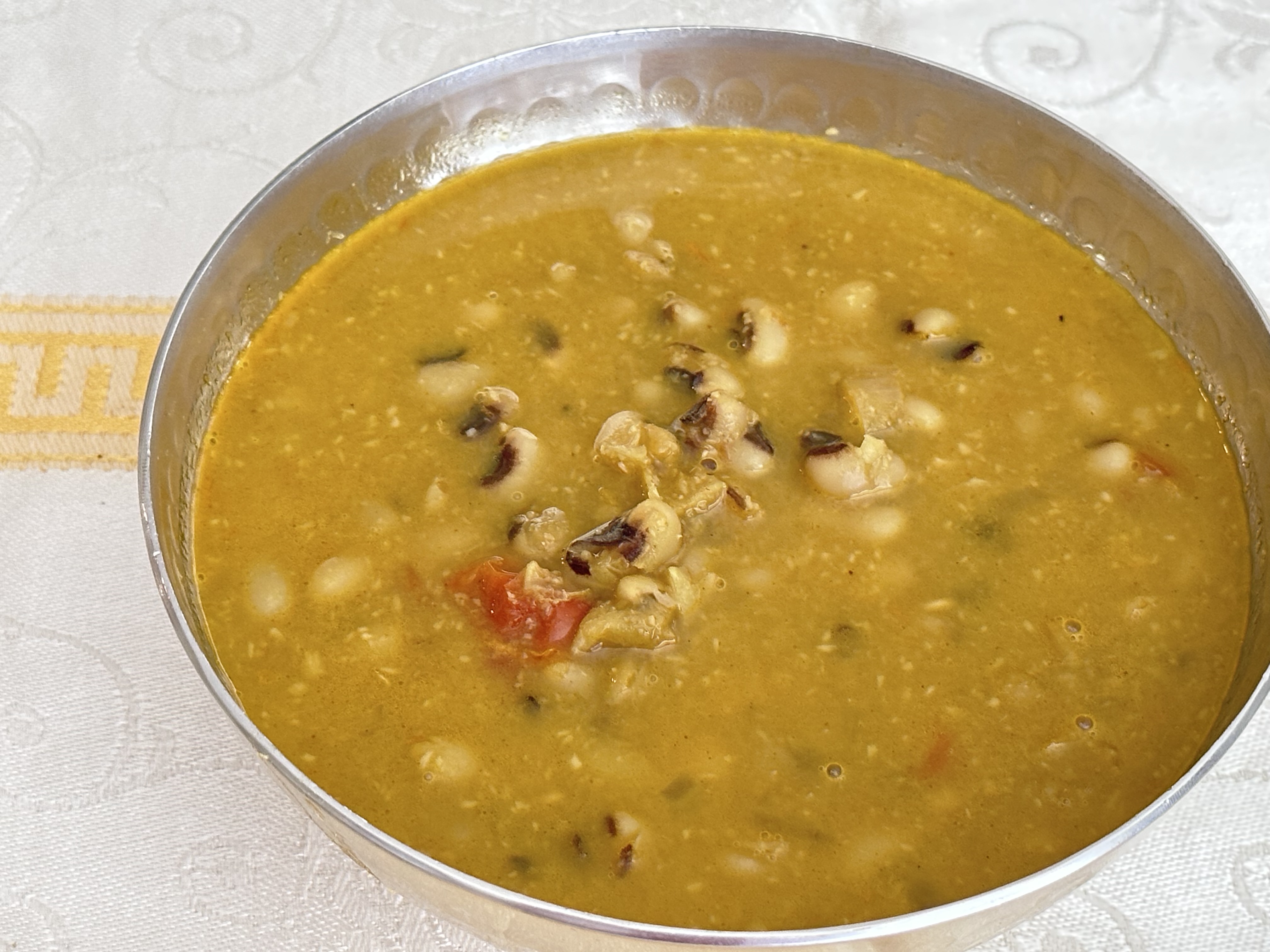
Black Eyed Peas Indian Style

I cannot believe I'm heading on a year of no posts. Still, hoping this will be of interest. 

In all of my life, despite trying all sorts of foods from all over, I have never once tried to make black-eyed peas. I believe i tasted them once, as part of "Texas Caviar" served at a function I was attending. In that mixture, the whole thing was stellar, but I could not pick out one flavor on its own. 

Alsande Tonak, Black-Eyed Peas, Curry
Alsande Tonak or Black-Eyed Pea Curry


Then, rooting around the internet for Indian recipes, I cam upon one called Alsande Tonak, a recipe from Goa. I cannot now place where I found this recipe, yet there are many of them out there to peruse, should you be a "comparison cook," like me. 

I promptly went out and bought some black-eyed peas to try out this recipe, and it was a hit with both my husband and I.

Caveat: 

So many Indian recipes call for using (as in the recipe I used to create my own) 12 or 13 dry red chilies in making the masala, then another teaspoon of hot red chili powder later on. If this is your thing, more power to you! 

While I do like some heat, I would never tolerate that over abundance of a good thing. My poor husband would likely perish at the first taste. He's not one for chili heat at all. So, under this restriction, I scaled back the whole red chilies to 1 and eliminated the chili powder later. 

About the Masala**

Most masalas require toasting each spice separately first, and setting them to cool, then grinding. This masala is going to be toasted later, so the first part can be avoided. Secondly, the masala is more than is needed for the recipe, so you will have some left for another time. Or, double the remainder of the recipe and use all this amount of masala.

About the Coconut***

The very best is having fresh coconut in this recipe. Many supermarkets these days do carry it in the freezer section. Those in my area do not, so I get frozen bags of it when I go to the Indian grocery.

But if you have no access to fresh coconut, use unsweetened dry coconut, about 1/4 cup, and add it to the spices to grind for the masala, then use it as directed for the masala.


Alsande Tonak

(or Black-Eyed Pea Curry) 

Alsande Tonak, Black-Eyed Peas, Curry
Alsande Tonak
Black-Eyed Pea Curry


1/2 pound black eyed peas, soaked overnight
2 fresh tomatoes, chopped
1 small onion or shallot, chopped
2 cups water

TONAK MASALA:
3 whole cloves
1-inch cinnamon stick
3 tablespoons coriander seeds
1/2 teaspoon black peppercorns
1 dried red chili, de-seeded, broken, for less heat
1 1/2 teaspoons fennel seeds
2 - 3 petals of a star anise
2 teaspoons white poppy seeds, optional
----------
1/2 teaspoon turmeric
1/4 teaspoon nutmeg

1 tablespoon cooking oil
1 small onion or shallot, chopped
3 - 5 garlic cloves, minced
3/4 cup frozen grated fresh coconut*** (see above)
3 - 4 teaspoons of the Tonak Masala** (see above)
1 teaspoon of salt, or to taste

Drain the soaking water from the black-eyed peas. Put them in a pot with  the tomatoes, onion / shallot and water and bring to boil. Lower heat, cover and cook for 20 to 30 minutes. They should be quite soft. If not, cook a little longer. 

Meanwhile, make the masala: Take all of the whole spices and grind them to a powder, then add to the powder the turmeric and nutmeg. Set aside.

In a skillet, heat the cooking oil and cook the onion until just golden. Add in the garlic for a minute or so and stir. Add in the grated fresh or frozen coconut and continue to cook, stirring until the coconut is golden. Add in the 3 or 4 teaspoons of the reserved masala and cook, stirring until the masala is well heated through. Add the contents of the pan to the cooked black-eyed peas along with the salt and mix well. If they need more liquid, add more water, then cook until heated through, and serve with roti or rice.


My passion is teaching people how to create a harmony of flavors with their cooking, and passing along my love and joy of food, both simple or exotic, plain or fancy. I continue my journey in ethnic and domestic cuisines, continuing my journey to explore diverse culinary experiences and hopefully to start you on a journey of your own. Join me also at A Harmony of Flavors on Facebook, and Pinterest.

Saturday, October 8, 2022

Chickpea Curry with Mango and Coconut

There are many, even in my own family, who do not care for chickpeas / garbanzo beans. For some it's texture related. For others, just plain dislike. I am not among those. I love chickpeas, whether in a salad, as hummus, as a dessert (Garbanzos en Dulce), in Indian mixtures like Channa Masala, or most ways I have encountered them. When a new recipe comes along, I sit up and take notice. 

mango, curry, coconut milk, chickpeas, garbanzos
Mango Coconut Chickpea Curry

Again this time it was from VeganRicha.com that I came across a recipe that comprised some of my favorite flavors, ticking so many boxes that I saved the recipe. Again, as with my previous post on some of her muffins, I change a few things to reflect my way of doing things. I completely understand where VeganRicha was coming from with her ingredients, because it makes the recipe more accessible to someone without a complete stock of Indian spices and other flavoring agents (unlike me). For her recipe of Mango Curry Chickpeas, please click on the link, which should take you right to that recipe page. 

tamarind, concentrate, prepared tamarind
One of the Brands I've Used
Richa uses ground cinnamon, cayenne and whole cloves. I used a small, 1-inch piece of stick cassia (the thick kind of stick), Kashmiri chili powder, and skipped the cloves, instead using crushed coriander seeds. I added in freshly ground pepper as well, and instead of a bay laurel leaf, which is what is known here in the US as bay leaf, I used a tej patta / tamal patra leaf, which is the Indian "bay leaf." These two have not much of anything in common, the tej patta tasting more of cinnamon than of bay laurel leaf. Toward the end of her recipe, she uses a couple of teaspoons of vinegar or lemon juice to balance out the sweeter flavors. Instead I used tamarind concentrate from the Indian grocery nearby. It is an already prepared version, in runny form, just as if you'd taken the time to soak the tamarind pods, soften all the flesh, then strain it of all the seeds and fivers to make the preparation from scratch. A real time saver!

None of these changes are huge, just my own preferences. Please check out Richa's original recipe before proceeding with mine.

Another thing about the recipe is using mango puree. I never buy

mango, coconut milk, chickpeas, garbanzos, curry
 Mango Coconut Chickpea Curry

mangos in a can or mango puree or even mango juice. I prefer to eat fresh mangoes any day. Yet as Richa states, truly ripe mangoes are hard to come by, so making ones own puree may not yield the hoped-for flavor / sweetness results. However, my son and his wife were visiting over the weekend past and we all went to Patel Brothers Indian Grocery in Chandler, to stock up on some things. Not being Indian, I did not realize we were coming up to Diwali. The place was aswarm with people! But, what fun! I love saris, and had the opportunity to see so very many beautiful ones that day as many sari-clad ladies roamed the store. I complemented each one as I saw them! 

Back to the mango, my son loves mango, and he does buy mango juice, so he purchased a large-ish carton of "Alphonso Mango Juice." When he drank a glass of it, it looked awfully thick, but hey, I wasn't drinking it. It was also the most deep orange in color.  And, they accidentally left it in my fridge when they left to go home, too far away to come back for it.

It was far sweeter than was necessary for this recipe, but with everything else in the recipe, it was toned down a good bit, and I added a little more of the (very tart) tamarind extract at the end than is called for. It was the most heavenly tasting curry, ever!


Mango Coconut Chickpea Curry

Serves 3 to 4

Makes about 3 to 4 servings
Mango, Coconut milk, Chickpeas, garbanzos, Curry
Mango Coconut Chickpea Curry

1 medium onion, chopped
1 inch fresh ginger, grated
3 - 4 cloves fresh garlic, minced
-----
2 teaspoons coconut oil
½ teaspoon cumin seeds
½ teaspoon crushed coriander seeds
1- inch cinnamon stick
1 s
mall tej patta leaf
-----
½ teaspoon fresh-ground black pepper
½ teaspoon Garam Masala
¼ - ½ teaspoon Kashmiri chili powder
-----
1¼ cup coconut milk
¾ cup mango puree
¼ - ½ teaspoon salt, or as needed
1½ cup cooked chickpeas, or canned, drained
2 - 3 teaspoons tamarind concentrate, or use lime juice
- cilantro, for garnish

Prepare the onion, ginger and garlic and set aside. Heat a skillet until quite hot and add in the cumin and coriander seeds with the cinnamon and tej patta leaf and stir quickly, until fragrant; a few seconds. Do not burn. Add in the onion, mix well and sauté until golden, then add in the garlic and ginger and stir for 1 to 3 minutes to take away the raw smell. Stir in the Kashmiri chili powder (or cayenne, to taste), ground black pepper and garam masala, until fragrant.

Stir in the coconut milk, mango puree and tamarind, then add in the chickpeas and mix well. Taste for salt before adding; chickpeas from a can may be salty enough already. Cover and let simmer for 10 minutes to meld flavors. Serve garnished with cilantro.


My passion is teaching people how to create a harmony of flavors with their cooking, and passing along my love and joy of food, both simple or exotic, plain or fancy. I continue my journey in ethnic and domestic cuisines, continuing my journey to explore diverse culinary experiences and hopefully to start you on a journey of your own. Join me also at A Harmony of Flavors on Facebook, and Pinterest.

Thursday, July 14, 2022

Individual Cheesecakes Cute as Can Be

These perfect little individual cheesecakes were made to serve at a special dinner for some friends. Every, single thing about them was perfect: flavors, appearance, texture, and the bonus was that they came out of the little ramekins just perfectly. Better results could not be hoped for. 

Matcha green Tea, green tea powder, cheesecake, individual cheesecake
Black Sesame Matcha Individual Cheesecakes

While they were perfect, and have stayed in my mind ever since, I haven't returned to them. Why? Well, there is really no huge valid excuse at all really. The biggest thing was that I ran out of Matcha Green Tea powder and haven't replaced it. 

Even longer ago, I had made Matcha and Black Sesame Muffins, and they were delightful. It was this combination, the green and the black flecks together are quite striking, that made me want to do something else with it. 

Using Matcha Green Tea

green tea, Matcha, higher quality
Matcha Green Tea Powder

Using Matcha green tea powder can be tricky, only in the sense that depending on the quality, the color may be the brightest of lime green (higher quality, more flavor, higher price), or a very dull green, or even a very pale green (lower quality, less flavor, lower price). The dull green was what was used in both the muffins and the cheesecakes.

With less flavor and color, more is needed to achieve even the least bit of color in a baked good. This alters the dry ingredient contents upwards, with the possibility of a dry outcome, whether dry muffins or a very stiff and dry cheesecake. 

Using higher quality Matcha will give a lot of color, but when it comes down to the facts, Matcha is very bitter. Too many people will not automatically love this bitterness, so a fine line is walked when making something like these recipes. Too much of a good thing and they may not be at all well-received. 

Some of this bitterness in a baked item can be mitigated by using more sugar, yet breakfast muffins are not meant to be sweet as a cupcake (though far too many are), and too much sugar will alter a cheesecake's consistency as well. 

An idea on that score is to dissolve the green tea powder in just enough hot water to make a smooth paste. In this way, the texture of either recipe would not be significantly altered. It also would afford the ability of actually seeing how much color is being added. The final baked goods will never be that same color, but it at least gives a clue. 

Aside from the issue of Matcha, having some in the first place, and then all these other considerations, these little cheesecakes are no difficulty to make. The mixture is a straightforward style, black sesame is available in many stores nowadays. While black sesame is not much different in flavor than the white, they do give visual interest. So, on with the recipe:


Black Sesame Matcha Individual Cheesecakes


Makes about 6 (6-ounce) 
or 8 (4-ounce) servings

matcha green tea powder, cheesecake, black sesame
Black Sesame Matcha Individual Cheesecakes
12 ounces cream cheese, room temperature
1 teaspoon lime zest, finely grated
½ cup white sugar
2-3 tablespoons Matcha Green Tea powder
1 pinch salt
1 cup sour cream
3 large eggs, room temperature
1 tablespoon black sesame seeds

- Extra sugar, for dusting
- Butter for greasing

Preheat oven to 325 degrees. Grease six (6-ounce) or eight (4-ounce) ramekins with butter. Dust them with sugar, tapping out excess. Set the ramekins into a roaster pan that can hold water halfway up the sides of the ramekins. Heat a large kettle of water and keep hot.

In a small bowl, whisk together the sugar and green tea powder. In a separate mixing bowl, beat the cream cheese until smooth, then add in the sugar mixture and lime zest and beat gently, just to combine. Add in the eggs, one at a time, beating gently until incorporated, then add in the sour cream and fold in the black sesame seeds.

Fill the ramekins of choice with the mixture. Set the roaster pan into the oven and carefully pour in the hot water around the ramekins to about halfway up their sides. Bake the cheesecakes 20 minutes for the smaller ones or 25 minutes for the larger ones. The centers should be a bit jiggly. Remove the pan from the oven and set the ramekins aside to cool. Chill the cheesecakes completely, refrigerated, before unmolding.

To unmold the cheesecakes, run a knife around the edges. They should start to spin a bit in their molds. Set a plate over top of the mold and invert the ramekin over the plate until the cheesecake comes loose onto the plate. Serve with a twist of lime and/or a dollop of whipped cream.


My passion is teaching people how to create a harmony of flavors with their cooking, and passing along my love and joy of food, both simple or exotic, plain or fancy. I continue my journey in ethnic and domestic cuisines, continuing my journey to explore diverse culinary experiences and hopefully to start you on a journey of your own. Join me also at A Harmony of Flavors on Facebook, and Pinterest.

Tuesday, July 12, 2022

Good Golly it's Gumbo

Long before ever visiting Louisiana, and later actually living there over the Y2K times, I had heard of Gumbo, as well as Etoufee, Jambalaya and a lot of other dishes, not all of which I really associated with Louisiana. Red beans and rice I'd had in Guatemala as a very young newlywed expat. maybe these were not the Louisiana-spiced version, but the concept was there. Boudin rouge or boudin noir are a sausage made with blood as part or most of its ingredients, but I had eaten those in Guatemala as well, under the name Moronga or Morcilla. Not a banana fan at any time, Bananas Foster never held any interest whatsoever. And long, long before ever learning that bread pudding was pretty much Louisiana's state dessert (according to me, anyway, as it was found in every single restaurant), I had been making and loving bread pudding.

When it came to hearing about Gumbo, I heard about okra as an ingredient, and I am absolutely not an okra fan. Thus, Gumbo held no interest. I like tomatoes, tomato sauces, spaghetti sauces, but there are times I just cannot abide them. At least my stomach seems to completely rebel at times, and then sometimes not. Etoufee, mainly tomato-ey red in color, was not high on a list of things I wanted to try. 

chicken, andouille sausage, file powder, gumbo, soup
Chicken and Andouille Gumbo

And then, we moved to Louisiana. Just north of Lake Ponchartrain, there were an amazing assortment of the best eating establishments all grouped so closely near to one another that you could barely toss a stone without hitting one, and we frequented them, almost all, in a constant rotation. My husband will not touch seafood, and not even fish. This is a mental allergy mind you, not a physical one. But as Louisiana cuisine is really all about fish and seafood, crawfish being absolutely huge there, there were many restaurants that had no meat on the menu, and some with a whole lot of truly stellar gourmet seafood dishes available, and with one lone hamburger plate on the menu, generally served with coleslaw (which my husband will not eat) and fries. They truly are not catering to the meat lover diet.

Exploring Gumbo Flavors

As we began exploring food in our new home area after we moved there, I was excited to taste this Gumbo I had heard and read about. I was willing to overlook okra, if the dish was good enough. And I had a couple samplings that were passable, for sure. But it was down in New Orleans proper, that I first had a small bowl of File Gumbo. Being a complete neophyte in the Gumbo world, I had asked the waitress what was the difference. she explained that Okra Gumbo used the okra as a slight thickening agent, whereas File Gumbo used File powder as it's slight thickening agent. Obviously okra has its own flavors as well, as does file powder, but I wasn't aware of that, then. 

➤File powder is nothing more than the powdered leaf of sassafras. It is generally

file powder, sassafras, sassafras leaf
File Powder
available in the spice aisle. This flavoring agent should never be added to the pot, but only stirred in at table. If cooked, it can become stringy.

On tasting the little bowl of File Gumbo, I was suddenly aware that this was amazingly good! Oh my, was it good! And then I went on a search. In each and every restaurant, I tried at least a small bowl or cup of Gumbo, just to see the range of flavors, and just how good, good can be. 

While living there, I never even attempted to make Gumbo. More often than not, the Gumbo in restaurants contained crawfish or shrimp. At the time I still wasn't aware of why I was swelling so much all the time, so I blithely ate my way through crawfish, shrimp, crab, blue crab, lobster and a lot of other shellfish. Now, sadly, I have long been aware of my intolerance for those most wonderful foods. Sigh.

roux, cooking oil, flour, mahogany color

Making Roux

Moving away from Louisiana, as all good things must end one day, I longed for Gumbo. As I set about learning what made a good Gumbo, I learned about roux. While I had made roux plenty of times, in preparation for a gravy, those were always a very blond roux, just cooked enough for the raw flour taste to be gone, but not for color. In Louisiana, there is ROUX. Pronounced, "ROO." And this is one not to be messed with. Every young girl must learn the way to make a proper roux, or you will not ever attain a proper gumbo. And this roux must be cooked until "mahogany colored." This requires constant attention to the pot, or the roux will burn. This disaster cannot be repaired, and the only solution is to begin again. This process of cooking oil and flour to a mahogany color can take 15 minutes or it can take an hour, completely dependent on the skill and ease of the one making it. If unskilled, as I was the first time, it took an hour over medium or medium low heat. Over a higher heat, and a lot of quick stirring, it can be accomplished in much less time, but without this very dark roux as a base, the gumbo will not be right. 
holy trinity, onions, green pepper, celery
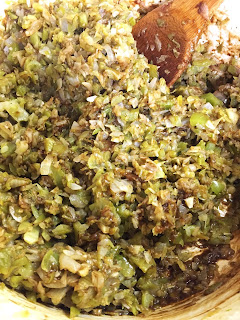
Holy Trinity added to Roux

The next important thing to know is that many, if not most, dishes in Louisiana are based on the flavors of the 'holy trinity, a phrase coined by chef Paul Prudhomme. This trinity is a combination, in equal parts, of chopped onion, green pepper and celery. These should be prepped and ready, as they are the first addition to the Gumbo pot, once the roux is ready. 

Andouille sausage, pronounced ahn-DOO-ee, in Louisiana, is generally very highly spiced, with a strong chili kick. For the unwary, this can be a shock. The Andouille found in other areas of the country is but a poor relative, in comparison. I've used Aidell's brand, as I can tolerate the salt levels, though it is not spicy hot. 


Chicken and Andouille Gumbo

Serves 8 to 10

gumbo, soup, chicken, andouille sausage, roux, file powder
Chicken and Andouille Gumbo


ROUX:
½ cup shortening or oil
½ cup all-purpose flour
----------
2 tablespoons cooking oil
2 medium onions, chopped
2 green peppers, chopped
6 stalks celery, chopped
3 cloves garlic
1 whole chicken, cut up
2 - 4 Andouille sausages, sliced
1 teaspoon dried thyme leaves
¾ teaspoon dried oregano flakes
¾ teaspoons dried basil leaves
2 bay leaves
½ teaspoon ancho powder or cayenne
6 cups water or stock
Salt & pepper, to taste

File Powder, for serving

MAKE ROUX: In a heavy soup pot or Dutch oven, melt the shortening or oil over medium heat. Add in the flour and stir continually with a wire whisk until the mixture becomes a deep mahogany brown. This can take from 10 minutes to half hour, depending on your heat setting. Do not scorch the roux or you will need to begin again. Set aside, off the heat.

ASSEMBLE GUMBO: In a large skillet, heat the 2 tablespoons of oil and sauté the onions, green pepper, celery and garlic until softened, about 10 minutes. Add to the pot with the roux. Dry the chicken pieces and brown them on all sides in the skillet, then remove them to the pot along with the sliced Andouille, all the spices, chili powder and water or stock. Add in about 1 teaspoon of salt, to start, and some freshly grated black pepper. Stir well, then cover and cook on very low heat for an hour, or until the chicken is very tender. Once the gumbo has cooked, check for seasoning and adjust as needed. Leave chicken on the bone, or remove the skin and bones, if preferred, returning the chicken meat to the pot. Serve with a scoop of rice. Serve File Powder on the side. Use 1 to 3 teaspoons per serving, to taste.

NOTES: If using shrimp or crawfish, add these in to the pot only about 5 to 7 minutes before ready to serve, to just cook through. 


My passion is teaching people how to create a harmony of flavors with their cooking, and passing along my love and joy of food, both simple or exotic, plain or fancy. I continue my journey in ethnic and domestic cuisines, continuing my journey to explore diverse culinary experiences and hopefully to start you on a journey of your own. Join me also at A Harmony of Flavors on Facebook, and Pinterest.

Monday, July 11, 2022

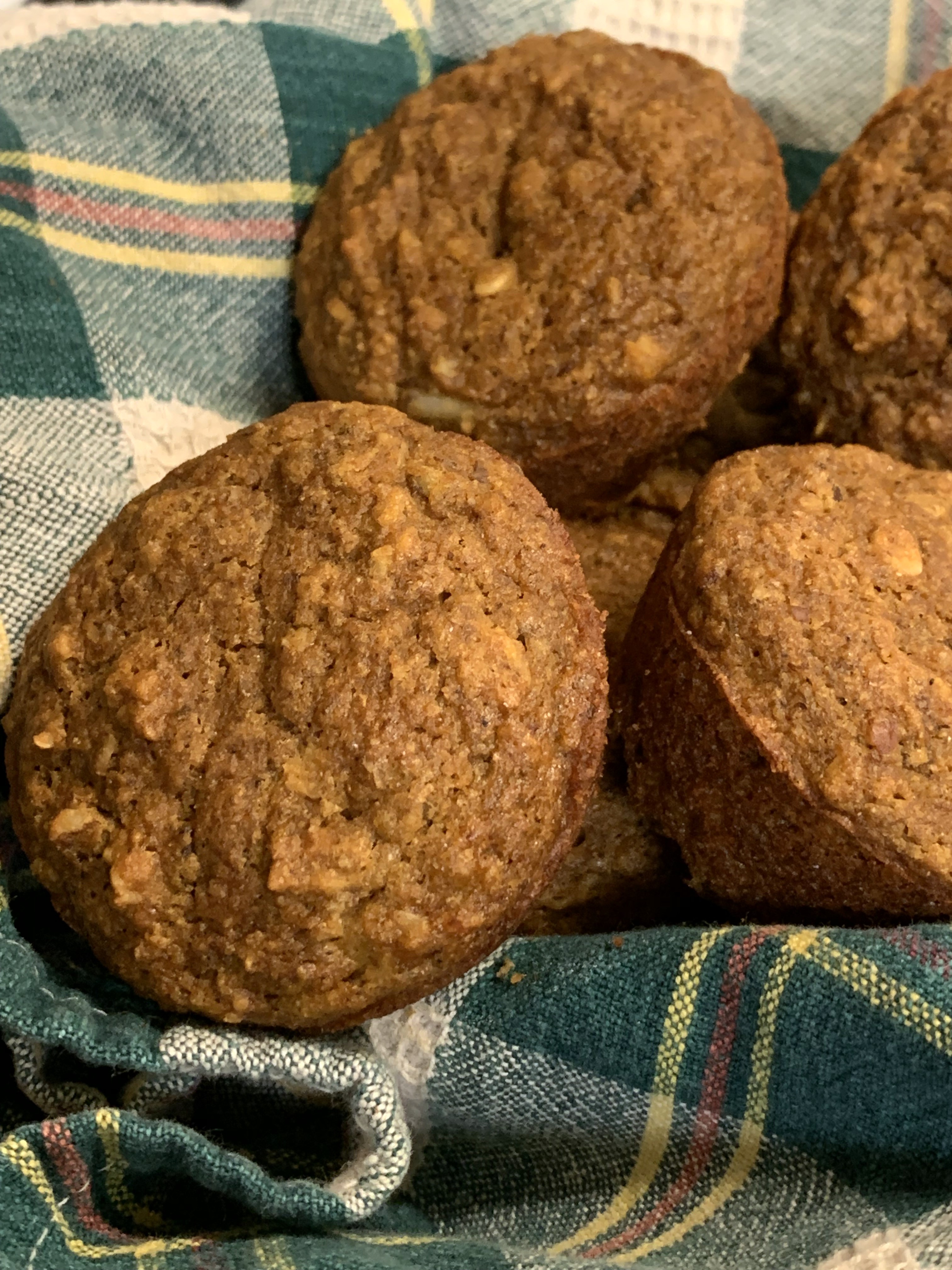
Bran Muffins are a Very Old Favorite

Long, long before bran and fiber became a health food, I loved bran muffins. Kellogg's® All-Bran® was common in our house when I grew up, and I recall my Grandma eating it as well. Of course, as a child, I didn't grasp what the reasoning was for this cereal, but I liked it. Even better though, were the bran muffins. No matter what, I have loved bran muffins.

Despite that, I hadn't eaten them or made them in a very long while, back when I started this blog back in 2012. And it wasn't until 2014 that I received all the bread cookbooks that started my journey into coaxing flavor from whole wheat, and not yet for another year or so that it came to be that I had a lot of accumulated bran at my disposal. I had long ago stopped eating cereal of any kind but oatmeal, so I wasn't keeping the All-Bran cereal at home, either. Many of the new bread recipes called for sifted whole wheat flour. As I was grinding my own wheat berries, for even better flavor (read more about why, here), some needed only the largest of bran flakes sifted from the flour, resulting in varying amounts of bran leftover. 

muffins, breakfast, bran, raisins, walnuts, fiber
Bran Muffins with Raisins and Walnuts

It was still quite some while of accumulating bran that I reasoned, "I can make Bran Muffins!"

Once I finally sat down to create a bran muffin recipe, first looking into recipes all over online at the time, to compare what was done, read comments about them and such, I cobbled together a plan. And it was still a while before I got to the point of making them. I cannot recall why it took so long to actually get around to making them, except for the fact of a whole lot of things happening in my life back then. Once I did, I made them quite a few times, and quickly ran out of all the accumulated bran I had stored, and once again I lapsed. 

I did include the recipe in my Newsletter, which is now defunct, so once more I am placing it here to keep.


Bran Muffins with Raisins and Walnuts


Makes 12 muffins
muffins, bran, breakfast, raisins, walnuts, fiber
Bran Muffins with Raisins and Walnuts

1 cup wheat bran 
1½ cups whole wheat or whole Kamut flour 
2½ teaspoons baking powder
½ teaspoon baking soda
½ teaspoon salt)
½ cup raisins
½ cup chopped walnuts 
¼ cup sugar, or palm sugar 
¾ cup milk
½ cup unsweetened applesauce
¼ cup molasses 
2 tablespoons cooking oil of choice
2 large eggs, beaten lightly

Preheat oven to 400 degrees. Grease or spray with cooking spray the wells of a 12-well muffin tin, or line wells with muffin papers Set aside.

In a mixing bowl, combine the first 8 dry ingredients and stir them together, ensuring the raisins are all separated from one another for even distribution. The raisins may be substituted with dates, if preferred.

Separately, whisk together the milk, applesauce, molasses, oil and eggs. Pour the wet ingredients into the dry ingredients and stir with a wooden spoon or spatula, just until all the dry ingredients are moistened. Quickly, scoop the batter into the prepared muffin wells, dividing the batter evenly between the wells, and pop the tin into the oven on a middle rack for about 15 minutes, or until a tester inserted in the center comes out mostly clean.

Remove the tin from the oven and set aside for 5 to 9 minutes, at which time the muffins will release quite easily from the tin. Serve warm, preferably with butter, for a treat any time.


My passion is teaching people how to create a harmony of flavors with their cooking, and passing along my love and joy of food, both simple or exotic, plain or fancy. I continue my journey in ethnic and domestic cuisines, continuing my journey to explore diverse culinary experiences and hopefully to start you on a journey of your own. Join me also at A Harmony of Flavors on Facebook, and Pinterest.
Friday, July 8, 2022

Root Vegetables in all their Glory

I love root vegetables. From beets to yucca and everything in between. There hasn't been much in the root vegetable or tuber family that I don't like, so they feature in many of my favorite recipes. 

Mixing parsnips with potatoes for mashed potatoes has been a habit of very long standing. Oven fries and potato salads make my husband particularly happy. Sweet potatoes, whether used in a "salad" application (like Sweet Potato & Black Bean Salad), baked in a casserole or made into oven fries, make me particularly happy.

root vegetables, squash, side dish, Fall recipe
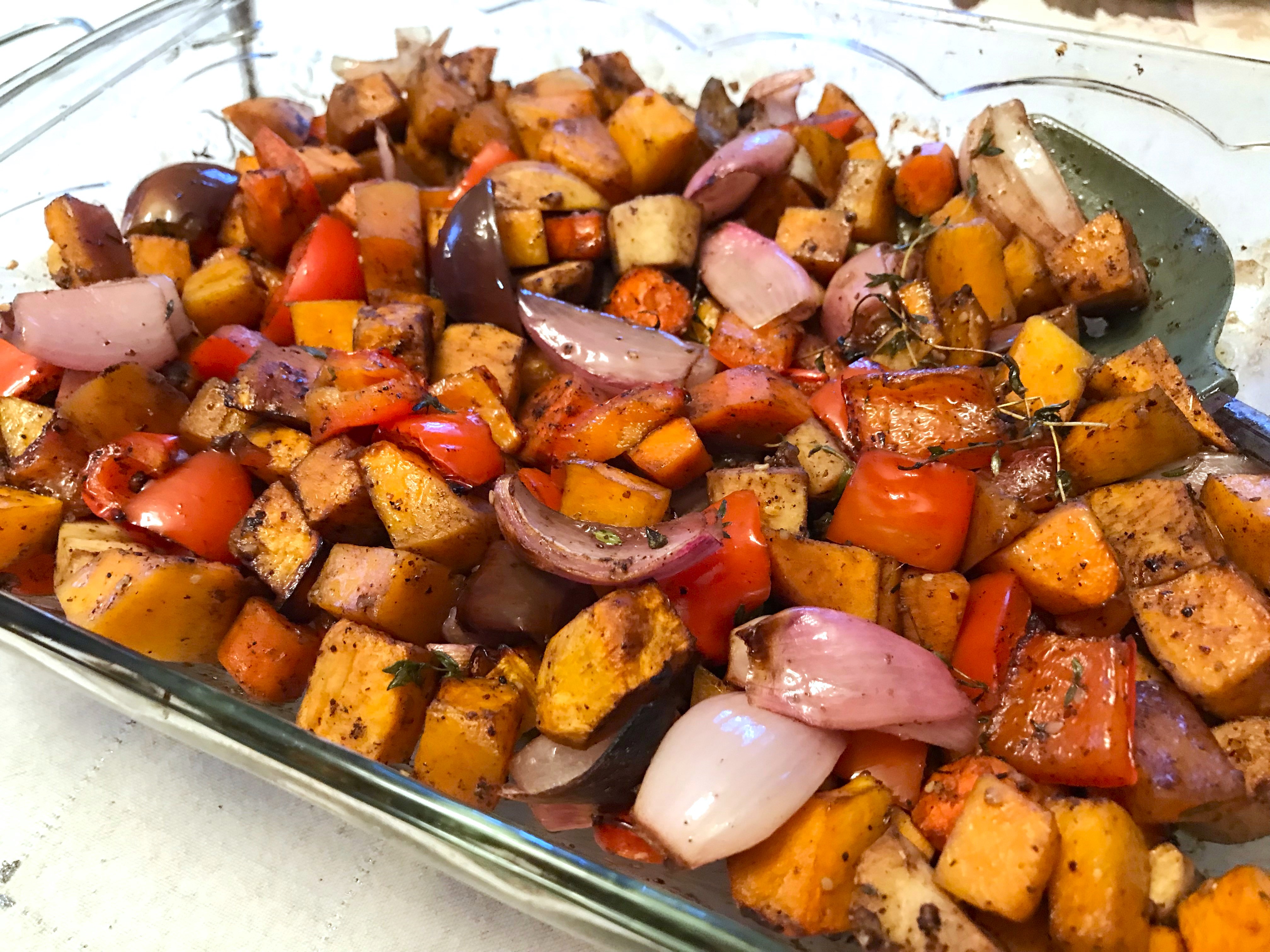
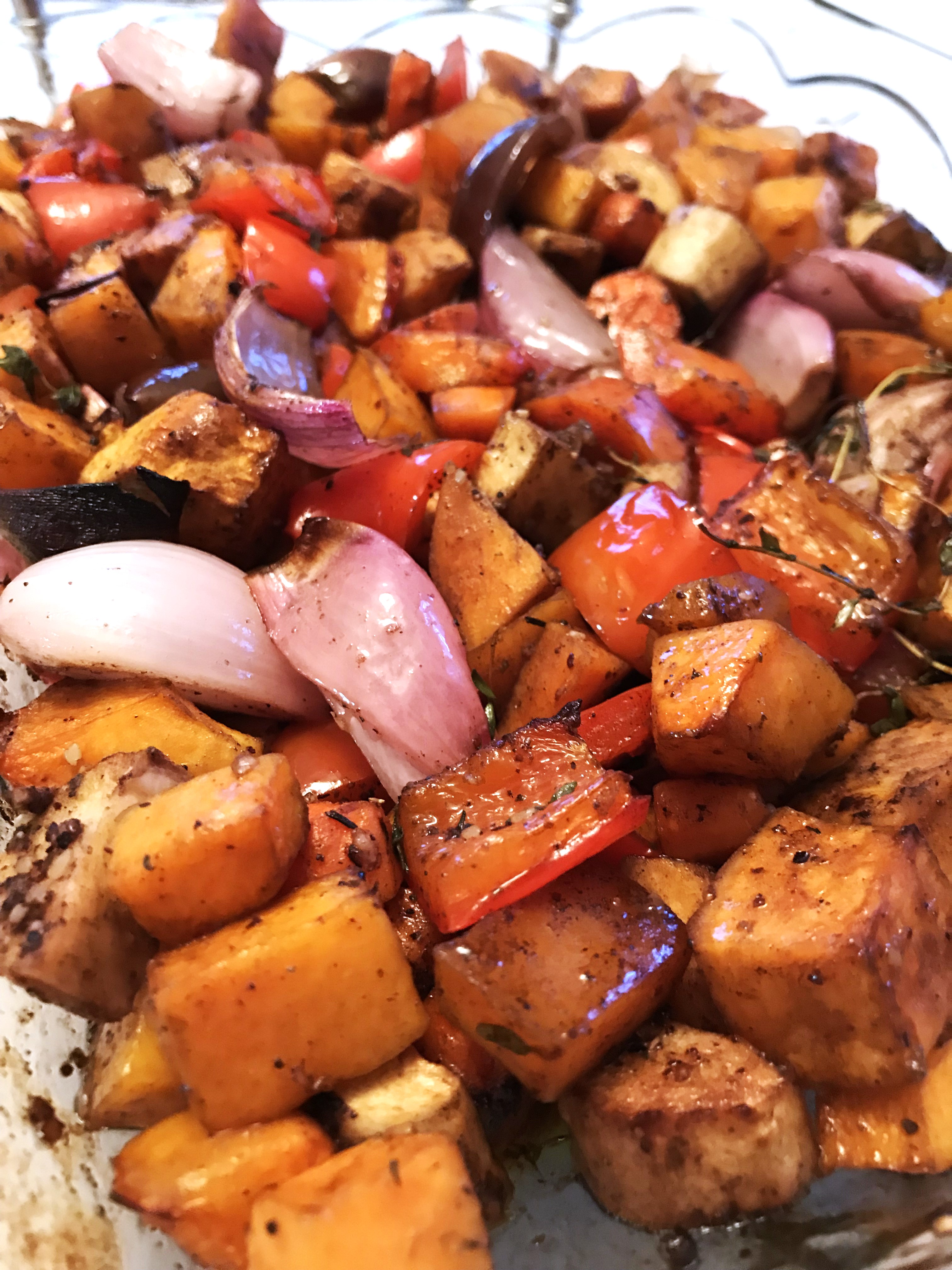
Oven Roasted Root Vegetables

While we are just now coming into the full heat of summer and many people avoid heating their ovens, this recipe for Oven Roasted Root Vegetables (plus a couple of others thrown in 😉) should stay in your files for when Fall and cooler temps start moving in, because this is one fabulous recipe. 

When Fall does hit, squash of all kinds abound, and I love squash as much as most root vegetables. I cannot begin to say I have tried all the countless varieties of squash out there, though I can say with certainty that butternut is normally in my fridge, but come Fall, I wander into other types, like the Australian blue varieties such as Jarrahdale or Jamboree, or Hubbard, though I am not always able to find them, or acorn. So, I normally add some kind of squash to my root vegetables, just because of their similar dense texture and cooking times.

Speaking of cooking times, this will depend entirely on the size you cut your vegetables in preparation for baking. You might cut them into 1 to 1 1/2-inch cubes, or you might go with a much smaller cut. I made an extra tiny cube size for the topping for an appetizer recipe I made for my son's birthday (Rosemary, Brie & Goat Cheese Tarts with Balsamic Roasted Root Vegetables), so being an appetizer portion, the veggies were cut to about 1/4-inch cubes. For some reason I have the time listed for those tiny cubes as nearly the same as for larger ones, though my recollection was that it took about 30 to 35 minutes. If you have much larger, say 1 1/4-inch sized, it can take an hour or even a little more. 

I like using shallots when making the vegetable mixture, but any kind of onion, red, white or yellow, will work just fine. Go with personal preference, or what is on hand. And another vegetable I use, again just because I like them, is green or red bell pepper - and which to use is up to the individual, or what is currently on hand. 

Mix root vegetables for this recipe as you choose, but keep in mind that red beets will stain everything a pretty red color. An alternative if you like beets is to look for either golden beets or Chioggia beets. Yucca root is particularly hard, so should be cut a bit smaller than the other veggies, if using. 


Oven Roasted Root Vegetables

Serves about 6

root vegetables, squash, side dish, Fall recipe
Oven Roasted Root Vegetables
VEGETABLES:
2 cups (10 ounces) kabocha squash, or butternut
2 cups (8.5 ounces) shallots
2 cups (8.3 ounces) red bell peppers
1¾ cups (8 ounces) sweet potato
1 cup (5.5 ounces) carrots
1 cup 4.5 ounces) parsnip

DRESSING:
½ cup Balsamic vinegar
¼ cup melted, unsalted butter
¼ cup olive oil
1 - 2 tablespoons fresh thyme leaves, or use a couple or three large whole sprigs 
1 teaspoon freshly ground black pepper
1 teaspoon salt
1½ teaspoons Zah’tar, optional
2 – 3 cloves garlic, minced

VEGETABLES: Preheat oven to 400 degrees. Grease or spray a 9 x 13-inch oven safe casserole and set aside. Peel and scoop out seeds from the squash and cut into ¾-inch cubes. Peel and cube the sweet potato, carrots and parsnip similarly. Cut ends from the shallots and slice into quarters, lengthwise. Clean seeds and membranes from the bell pepper and cut into squares. (Yes, the pepper is not a root vegetable, but it gives great flavor and color!)

DRESSING: Whisk together all the dressing ingredients and pour over the prepared vegetables in a bowl. Toss well to coat the vegetables evenly. Pour the vegetables with the dressing into the prepared casserole dish and bake for 40 to 50 minutes, or until the vegetables are easily pierced with the tip of a knife.


My passion is teaching people how to create a harmony of flavors with their cooking, and passing along my love and joy of food, both simple or exotic, plain or fancy. I continue my journey in ethnic and domestic cuisines, continuing my journey to explore diverse culinary experiences and hopefully to start you on a journey of your own. Join me also at A Harmony of Flavors on Facebook, and Pinterest.

Thursday, July 7, 2022

This Meatloaf is not Just a Meatloaf

This meatloaf is excellently flavored - with Gorgonzola! Not just your everyday meatloaf, for sure. Diverse flavors all blended together become an intriguing and evocative combo.

Meatloaf has always been just "bleh" for me. I surely have never ordered it in a restaurant, as does my husband. Even worse, if it has had raw onion added in before baking. I love onions, but not raw. I prefer instead to caramelize onions before adding them to a meatloaf mixture, which, to me, provides a lot more depth of flavor. 

meatloaf, entree, Gorgonzola cheese,
Gorgonzola Meatloaf

Trying out different flavor combinations, on the very occasional meatloaf, has been due to that need of mine to make things taste better. Especially if it is something I find so unappealing in general. I know there are many meatloaf lovers who will vehemently disagree with me, my own husband included. But if you want something a little different, then look no further. 

It also is not easy to take an enticing photo of meatloaf - of any sort. My photos leave much to be desired, I admit. You'll have to just go on my word here, that this is one truly delicious dinner item. When I made this originally, cherry preserves were mixed with ketchup to spread over the top. Currant jelly would work as well, though the jelly would have to be melted in order to mix with the ketchup. In looking back at this recipe, a new idea popped into my head. I never, ever, stop tweaking recipes, even my own. I rarely make a recipe the same way twice, even when it was fabulous the first time. I believe that when I make this for dinner tonight, I am going to add in some soaked and softened dried blueberries as well. 😁 That, and I am planning on using half ground beef and half ground turkey.


Gorgonzola Meatloaf

Makes 2 meat loaves; serves about 6 to 8
meatloaf, Gorgonzola cheese, dinner idea, entrees
Gorgonzola Meatloaf

2 pounds lean hamburger
1 cup applesauce
¼ cup A-1 Sauce®
2 teaspoons salt
- freshly ground black pepper, to taste
4 cloves fresh garlic, minced
3 eggs, lightly beaten
¾ cup rolled oats
2.5 ounces Gorgonzola crumbles
½ cup ketchup
½ cup cherry preserves (or use melted red currant jelly)

Preheat oven to 350 degrees. Have two 4 x 8-inch loaf pans sprayed with cooking spray; set aside.

In a large bowl, thoroughly mix together all ingredients except the ketchup and preserves. Divide the mixture into two equal portions and pat them into the prepared loaf pans.

Combine the ketchup and cherry preserves. Divide this mixture to spread over each of the meatloaves. Bake them for approximately 1 hour. Slice and serve.

~~~~~~~~~~~~~~~~~~~~~~~~~~~~~~~~~~~

UPDATE: I did make this meatloaf the day I wrote this blog, and used the changes I noted above, namely using half ground chicken and half ground beef, and adding 4 (or 5) ounces of dried blueberries, which I soaked briefly (then drained before adding to the mix of ingredients) while I was getting the rest of the ingredients in the bowl to mix.
 
meatloaf, Gorgonzola, dried blueberries, ground chicken
Revised Gorgonzola Meatloaf with half ground chicken and dried blueberries


There are many people who do not appreciate the addition of sweet into a savory application. Some consider their own meatloaf recipes canon, and any additions or subtractions near sacrilege. I understand. Truly. If however, you do love the occasional addition of the less common ingredient, then this was a fabulously flavored meatloaf. The original was great, and this just took a couple more steps upward in my humble opinion! 

I mentioned at the beginning of this blog about onion in meatloaf. I did not use onion in this particular one, and had a question from a friend on that in Facebook. While I did not add onion in this recipe, if I were to do so, I would chop a medium onion and saute in oil until well caramelized before adding. 


My passion is teaching people how to create a harmony of flavors with their cooking, and passing along my love and joy of food, both simple or exotic, plain or fancy. I continue my journey in ethnic and domestic cuisines, continuing my journey to explore diverse culinary experiences and hopefully to start you on a journey of your own. Join me also at A Harmony of Flavors on Facebook, and Pinterest.

Wednesday, July 6, 2022

No Matter What You Call Them

When I first started my journey into Indian foods, it was a combination of being taken to an Indian Buffet or two, and then venturing into more as my cravings for those flavors expanded. That, along with the first cookbook I received, "The Complete Asian Cookbook" by Charmaine Solomon, with a section on Indian food, later followed by "The Bombay Palace Cookbook" by Stendahl. 

In each Indian Buffet I frequented, there were little lamb meatballs, obviously done on a grill or maybe in a tandoor oven, and definitely with a char-grilled flavor. Prominent enough to notice in these meatballs was the flavor of mint, other spices just making the whole so very delightfully flavored. I looked for these, when I found them, as they quickly became a favorite.

But, what are they called? 

That is something I never found out. 

ground lamb, kebabs, grilling, Middle Eastern, Indian, ethnic
Lamb Kofta or Lamb Seekh Kebabs

Over the many, many years since those early days, I have learned a lot more about Indian cooking, recipes, flavors, flavors divided by areas of India, spices - oh! the spices! - and so very much more. But, I never did find a specific recipe for those little grilled lamb meatballs. On the buffets, they were always in a bin of their own. No sauce, maybe a sprinkling of fresh cilantro. 

Much later, reading about Middle Eastern foods and such, while the flavors in general do not call me the way Indian foods do, there are a lot of great foods I have tried to date, and I also read about how much of the food of Persia and other Middle East countries filtered down into India, and in fact is how Naan bread came to be in northern Indian cuisine. 

And there I discovered Kofta. And then Seekh Kebabs.

Or Kefta, or Kafta, but however the spelling comes out, these are the very closest to the flavors I was looking for. I did a little tweaking, mainly adding in a little more fresh mint, but mostly in keeping with the flavors I recalled. Grilling (or broiling in a pinch) gives them that marvelous added layer of flavor. Obviously in a country that does not, in general, eat beef, if they even eat meat at all, lamb would be the red meat of choice. The closest to these little meatballs I have found in Indian cookbooks is called Seekh Kebab, usually the "seekh" referring to ground or minced meat (but not always!) and can be used for lamb, chicken or whatever meat is being used in the recipe. I have made Seekh Kebabs with chicken meat, and they are good, though I made them in a frypan. These type of kebab are usually formed into long sausage shapes around skewers, more often a flat skewer that helps keep the meat on while rotating on the grill. 

Ultimately, no matter what you call them, these are the closest approximation to those wonderful little grilled meatballs on the Indian Buffets.


Lamb Kofta or Lamb Seekh Kebabs

Makes about 6 to 8 servings

ground lamb, meatball, kebab, grilling, Middle Eastern, Indian, ethnic
Lamb Kofta or Lamb Seekh Kebabs
2 pounds ground lamb, or substitute beef or go half and half
1 medium potato, baked, cooled, peeled, riced
2 shallots, minced finely
3 large cloves garlic, minced finely
½ cup fresh parsley, minced finely
½ cup fresh mint, minced finely
¼ cup fresh cilantro, finely minced
1½ teaspoons salt
1 teaspoon ground sumac, optional
½ teaspoon ground cinnamon
½ teaspoon ground allspice
½ teaspoon ground cumin
½ teaspoon ground cardamom
½ teaspoon ground black pepper
- Pinch ground cloves
 
To be more authentic, finely mince the meats, or briefly pulse them in the food processor. It should not be paste, but much finer than ground meat.

Combine all the ingredients and mix well with clean hands to distribute all the spices evenly. Form the mixture into elongated meatball shapes on pre-soaked bamboo skewers or on metal skewers. Another method is to form the meat into a single-thickness hot-dog shape, evenly along the length of the skewer. To bake the kofta, preheat oven to 425 degrees. Set the skewers on a broiler rack or other rack over a rimmed baking sheet and bake the kofta for 20 to 25 minutes. Thinner meat formed along the length of the skewer will be done in a much shorter time. If grilling, grill as for burgers, turning as needed for even browning. Serve with tzatziki or hummus and flatbreads with a side salad for an amazing meal.


My passion is teaching people how to create a harmony of flavors with their cooking, and passing along my love and joy of food, both simple or exotic, plain or fancy. I continue my journey in ethnic and domestic cuisines, continuing my journey to explore diverse culinary experiences and hopefully to start you on a journey of your own. Join me also at A Harmony of Flavors on Facebook, and Pinterest.

Tuesday, July 5, 2022

Easy Whole Wheat Bread for Beginners

I just love it when someone who knows nothing about bread making asks if I can show them how. This happened with a friend of ours a couple years ago. He had never made bread dough, to my knowledge. He certainly had never kneaded bread dough. He does like most of my heavier, denser loaves, enjoying whole grains. He loves beer. And so I set myself the task of creating a recipe he could make for himself.

whole wheat, bread, baking with whole wheat
Whole Wheat & Ale Bread

Whole Wheat?

I explained to him my ideas on buying whole wheat flour from the grocery, mainly, DON'T. My main gripe about whole wheat bread, long ago when I first started trying whole grain breads out, was that they just tasted blah. Later on, after reading Peter Reinhart's books I realized that those grains need some coaxing to extract flavor. That, but even more importantly, I learned about the way "whole wheat flour" is created. And I do mean created. No grocery-store-bought whole wheat flour is anything but a construct, made by taking the white flour, and adding back in enough of the bran to approximate "whole wheat," and this may vary by brand. No wonder it tastes so different when you grind your own wheat berries! There is no dividing up the white endosperm (the starchy part used for white flour) from the bran (the outer coating and source of fiber) and the germ (the food source for the grain when sprouting, and source of many B-vitamins, some protein, minerals and healthy fats).

The reason for this dividing up of the grain parts is of course, getting the white refined starch we call white flour, a process that has now removed about a quarter of the protein and greatly reducing at least 17 key nutrients. What is left is a mere shadow of the original grain. To "rectify" this situation, white flour is "enriched," a process whereby some few nutrients are added to the flour, but certainly not in the proportions, nor the way, in which nature originally provided. Another reason for this division is that the germ, containing so very much goodness, also tends to go rancid very easily, so removing it means the resultant (mostly worthless) white flour is able to stay in warehouses and on grocery shelves much, much longer. And of course, removing the bran is removing the fiber we so need in our diets. (Facts gleaned from The Whole Grains Council.org)

Enough of the lesson!

Suffice to say that once I started grinding my own grain, whether slowly and tortuously with my Kitchen Aid grinder attachment long ago, or very quickly with my Whisper Mill, the flavors began to truly stand out. This is due to having the whole grain, bran, germ and endosperm, all ground together, yielding far superior flavor. There are other ways of extracting flavor, but just this step makes it worthwhile. I told our friend to look for a place that he could take whole wheat grains and have them ground, as is, for him to use.

Other Considerations

When making whole grain breads, keep in mind that the whole grain, ground together, yield a substantial amount of things to prevent a good rise. Those very things that make whole grain breads heavy and dense, namely the bran and germ. These have no gluten proteins and cannot help with the rise and stretchiness of the dough. The bran, in fact, can actually cut the gluten strands, furthering this problem. Any bread that is labeled "whole grain" must have some token amount of whole grain in it. However, no true whole grain, or even mostly whole grain, bread will ever be light and fluffy. Can't happen. While I am not a wholehearted proponent of plain white bread (I never, ever buy plain white bread, but only bake my own when needed), some white bread flour in a whole grain recipe can help give a little rise you may not get otherwise. In my recipe below, I have 3 parts whole grain to one part white flour, for just a little lift. 

Kneading

Kneading is an individually learned process. I don't believe any two people perform this process quite the same. The goal is to manipulate the dough, forcefully enough for proper mixing, long enough to develop such gluten as is possible to coax into being. (This does not apply to rye breads - that is another article entirely.) Often, at the beginning of kneading, the tendency for a new bread maker is to add more and more flour, because at the beginning the dough can be quite sticky. 

Avoid this if at all possible. 

The more flour that goes into the dough, the denser and dryer the loaf will be. Add any flour judiciously, and do your best to deal with the sticky hands. The dough eventually will become more pliable and less sticky, the closer to "windowpane" you get. In Peter Reinhart's books, he describes the proper feel as "tacky, but not sticky." If you have a metal "bench scraper" this can help with scraping the dough up from your counter or kneading surface so kneading can continue. 

bread making, kneading, windowpane stage
Windowpane

One way I have worked with in a lot of breads is spraying my granite countertop (often my hands as well) with spray oil and kneading on this oily surface. If more is needed occasionally, at least I am not making the dough more dense. 

Windowpane can be reached in 10 to 20 minutes of kneading depending on the strength of your arms and the amount of manipulation. Press, roll, fold, stretch, turn; move and manipulate the dough constantly, to knead. Windowpane means being able to pick up a smallish piece of the dough, then stretching it between two hands until you can see light showing through the dough, but without tearing. And happy baking!


Whole Wheat & Ale Bread

Makes 1 round loaf
whole wheat, making bread, how to knead
Whole Wheat & Ale Bread


3 cups <2 tablespoons whole wheat flour (1¾ cup whole wheat berries, ground)
1 cup + 2 tablespoons white bread flour, plus some for dusting
2 teaspoons salt
1 packet (2½ teaspoons) instant rise/rapid rise yeast
3 tablespoons molasses
2/3 cup cool water
¾ cup < 2 tablespoons strong-flavored ale (or use all water)

In a large bowl, combine the two flours, adding the salt to one side of the bowl and the yeast to the opposite side of the bowl. Mix the water, ale and molasses together and pour into the flour mixture. Begin mixing with hands or a wooden spoon until the mixture comes together as a mass. Oil a clean, smooth surface and turn the dough out onto the surface and knead for 12 to 15 minutes, or until it passes the windowpane test.

Grease a clean bowl and place the dough into the bowl, turning once to grease both sides. Cover with a towel or with plastic wrap and set aside to proof until doubled. This can take up to 4 hours but begin checking at 2 hours. When a finger is pressed into the surface of the dough, it should still spring back slightly. If the finger leaves a deep indent, it has proofed too much, so keep an eye out.

Once dough is risen, turn dough out onto a lightly flour the work surface. Gently fold and turn the dough to degas. Flatten the dough into a rough rectangle. Press corners into the center, then again press the new “corners” into the center. Turn the dough over and firm the rounded ball by pressing, dragging and turning the dough until the surface is very taught. Set the loaf onto a parchment lined baking sheet. Cover with plastic wrap and set to rise until doubled. It is ready when the dough still springs back when gently pressing a finger into it.

Have oven preheated to 425 degrees. Place bread onto a rack near the center of the oven and bake 25 minutes. Lower the oven temperature to 400 degrees and bake a further 10 minutes, until the loaf is golden brown and sounds hollow when tapped on the bottom. Transfer to a wire rack and leave to cool completely before cutting.


My passion is teaching people how to create a harmony of flavors with their cooking, and passing along my love and joy of food, both simple or exotic, plain or fancy. I continue my journey in ethnic and domestic cuisines, continuing my journey to explore diverse culinary experiences and hopefully to start you on a journey of your own. Join me also at A Harmony of Flavors on Facebook, and Pinterest.

Monday, July 4, 2022

What to do with Extra Beets

Make a cake, that's what!

I had someone give me a large paper sack full of red beets one time. I love beets. I canned some of them. I baked some of them, in Lemon Garlic Beets, I put them in salads, made Root Vegetable and Greens Soup, and I still had some beets leftover. Someone suggested a Chocolate Beet Cake. I said, "What???" I'd never heard of such a thing in all my nearly 70 years (at that time) of life!" But as I Googled, I found many recipes for Chocolate Beet Cake out there, so color me shocked!

red beets, chocolate, cake, dessert, cakes
Chocolate Beet Cake

Okay, all that is well and good, but I am not personally over fond of chocolate. Chocolate cakes (I eat them occasionally, not at all often) or chocolate ice cream (I really dislike chocolate ice cream), um, no thank you. I wondered, "Is there a cake made with beets that does not include chocolate?"

At the time I created this cake, and searching for recipes in existence, the pickings were mighty slim. Most cakes made with beets, and this still holds true, having done a cursory search just now, have chocolate as an ingredient. As an observation, when I did make the Chocolate Beet Cake originally, the batter was a lovely dark red. Once baked, however, the color was just simply that of a chocolate cake - no particular red color left as "evidence," making it something my husband, a confirmed beet-hater, truly enjoyed.

And so, I hoped this would hold true if I made a cake without the chocolate to hide the evidence of beets as an ingredient. My thought process was to go with a spice cake. We both love spice cakes, my Prune Spice Cake being one in particular I have made fairly often. The prunes give it a bit more depth of color, but a spice cake on its own is still darker than any white or yellow cake. I proceeded with the idea of a Beet Spice Cake. 

pureed red beets, cake, spice cake, dessert
Beet Spice Sheet Cake

My instinct payed off; there was absolutely no evidence of pinkness in the final cake. Looking back at the recipe (I never stop tweaking, even with my own recipes!), I used some of my Mocha Spice Blend II, but that gave me the idea of maybe just adding in some instant expresso powder, maybe 1 to 3 teaspoons, depending on how much you love coffee flavor! If a fine powder, this can be added with dry ingredients. If it is in crystal form, then mixed with a tablespoon of water to melt first and added with the eggs and oil would work. 


Beet Spice Sheet Cake


Makes one 18 x 24-inch sheet cake, or one 8 or 9-inch round, two-layer cake

1 cup pureed, cooked beets (about 3 medium beets)
beets, cake, spice cake, no chocolate
Beet Spice Sheet Cake

2 cups all-purpose flour
2 teaspoons baking powder
1 teaspoon baking soda
1 teaspoon salt
2 teaspoons allspice
2 teaspoons Mocha Spice, optional (or substitute your favorite Pumpkin Pie Spice Mix)
1 cup vegetable oil
4 large eggs
¾ cup granulated sugar
¾ cup brown sugar
1½ teaspoons vanilla extract
¾ cup ground pecans or walnuts

Boil the whole beets in water to cover for 45 minutes to an hour, until easily pierced with a fork. Cool completely. This can be done a day earlier. Peel the beets and puree finely in a food processor, food mill, or on a small holed grater.

Preheat oven to 350 degrees. Grease or spray with cooking spray a sheet pan (about 18 x 24-inches, with a rim at least ½-inch high). Line the pan bottom with parchment and spray again with cooking spray. Set aside.

In a bowl, whisk together the flour, baking powder, baking soda, salt, allspice and Mocha Spice blend. Separately, whisk together the vegetable oil, eggs, both sugars and vanilla extract. Pour the liquid ingredients into the bowl of dry ingredients and stir well until all the dry ingredients are moistened, then fold in the ground nuts. Pour the batter into the prepared sheet pan and spread batter evenly. Bake the cake for about 13 to 15 minutes, or until a tester inserted in the center comes out mostly clean.


My passion is teaching people how to create a harmony of flavors with their cooking, and passing along my love and joy of food, both simple or exotic, plain or fancy. I continue my journey in ethnic and domestic cuisines, continuing my journey to explore diverse culinary experiences and hopefully to start you on a journey of your own. Join me also at A Harmony of Flavors on Facebook, and Pinterest.

Disqus