Translate

Showing posts with label curry. Show all posts

Saturday, June 17, 2023

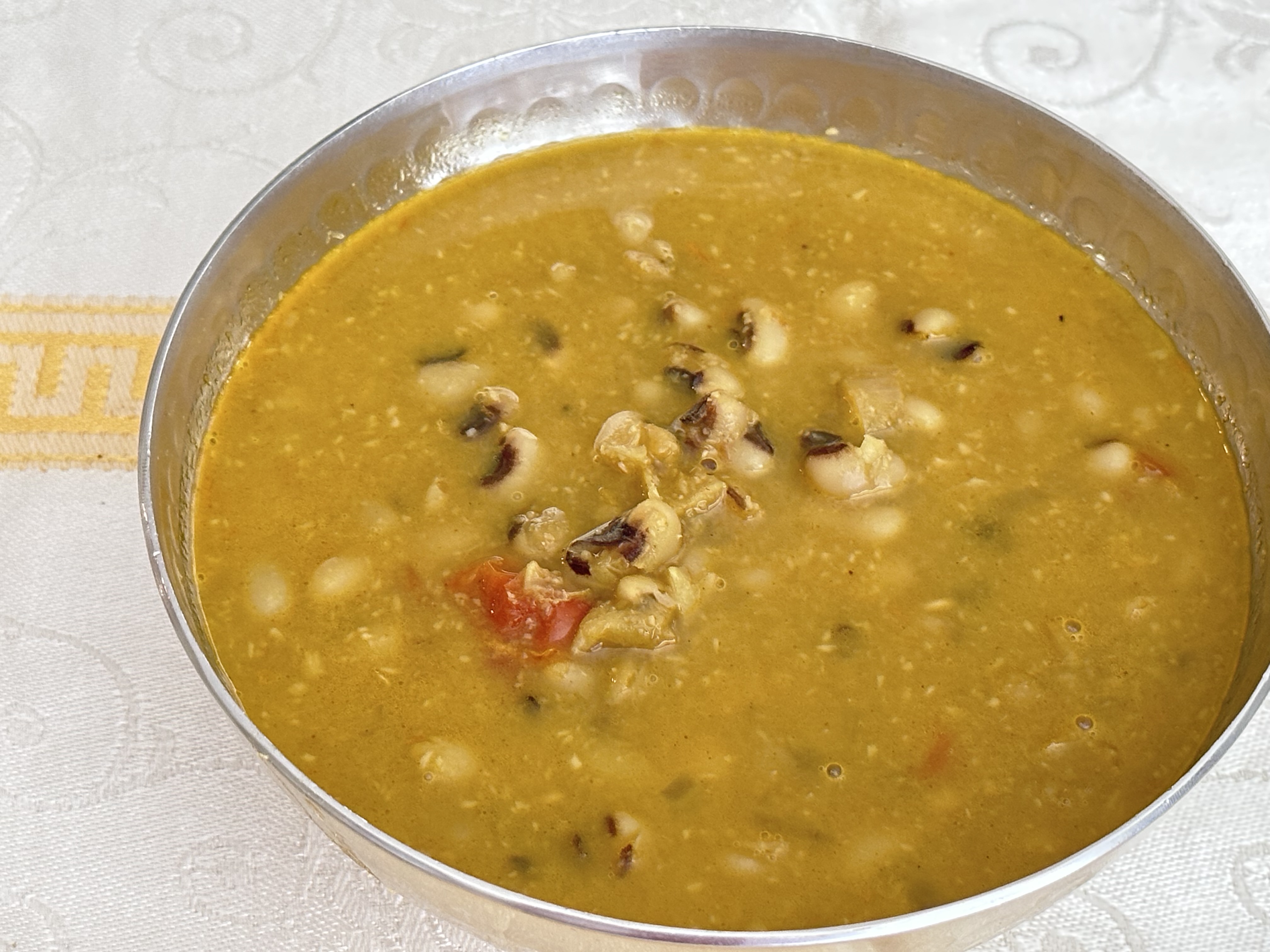
Black Eyed Peas Indian Style

I cannot believe I'm heading on a year of no posts. Still, hoping this will be of interest. 

In all of my life, despite trying all sorts of foods from all over, I have never once tried to make black-eyed peas. I believe i tasted them once, as part of "Texas Caviar" served at a function I was attending. In that mixture, the whole thing was stellar, but I could not pick out one flavor on its own. 

Alsande Tonak, Black-Eyed Peas, Curry
Alsande Tonak or Black-Eyed Pea Curry


Then, rooting around the internet for Indian recipes, I cam upon one called Alsande Tonak, a recipe from Goa. I cannot now place where I found this recipe, yet there are many of them out there to peruse, should you be a "comparison cook," like me. 

I promptly went out and bought some black-eyed peas to try out this recipe, and it was a hit with both my husband and I.

Caveat: 

So many Indian recipes call for using (as in the recipe I used to create my own) 12 or 13 dry red chilies in making the masala, then another teaspoon of hot red chili powder later on. If this is your thing, more power to you! 

While I do like some heat, I would never tolerate that over abundance of a good thing. My poor husband would likely perish at the first taste. He's not one for chili heat at all. So, under this restriction, I scaled back the whole red chilies to 1 and eliminated the chili powder later. 

About the Masala**

Most masalas require toasting each spice separately first, and setting them to cool, then grinding. This masala is going to be toasted later, so the first part can be avoided. Secondly, the masala is more than is needed for the recipe, so you will have some left for another time. Or, double the remainder of the recipe and use all this amount of masala.

About the Coconut***

The very best is having fresh coconut in this recipe. Many supermarkets these days do carry it in the freezer section. Those in my area do not, so I get frozen bags of it when I go to the Indian grocery.

But if you have no access to fresh coconut, use unsweetened dry coconut, about 1/4 cup, and add it to the spices to grind for the masala, then use it as directed for the masala.


Alsande Tonak

(or Black-Eyed Pea Curry) 

Alsande Tonak, Black-Eyed Peas, Curry
Alsande Tonak
Black-Eyed Pea Curry


1/2 pound black eyed peas, soaked overnight
2 fresh tomatoes, chopped
1 small onion or shallot, chopped
2 cups water

TONAK MASALA:
3 whole cloves
1-inch cinnamon stick
3 tablespoons coriander seeds
1/2 teaspoon black peppercorns
1 dried red chili, de-seeded, broken, for less heat
1 1/2 teaspoons fennel seeds
2 - 3 petals of a star anise
2 teaspoons white poppy seeds, optional
----------
1/2 teaspoon turmeric
1/4 teaspoon nutmeg

1 tablespoon cooking oil
1 small onion or shallot, chopped
3 - 5 garlic cloves, minced
3/4 cup frozen grated fresh coconut*** (see above)
3 - 4 teaspoons of the Tonak Masala** (see above)
1 teaspoon of salt, or to taste

Drain the soaking water from the black-eyed peas. Put them in a pot with  the tomatoes, onion / shallot and water and bring to boil. Lower heat, cover and cook for 20 to 30 minutes. They should be quite soft. If not, cook a little longer. 

Meanwhile, make the masala: Take all of the whole spices and grind them to a powder, then add to the powder the turmeric and nutmeg. Set aside.

In a skillet, heat the cooking oil and cook the onion until just golden. Add in the garlic for a minute or so and stir. Add in the grated fresh or frozen coconut and continue to cook, stirring until the coconut is golden. Add in the 3 or 4 teaspoons of the reserved masala and cook, stirring until the masala is well heated through. Add the contents of the pan to the cooked black-eyed peas along with the salt and mix well. If they need more liquid, add more water, then cook until heated through, and serve with roti or rice.


My passion is teaching people how to create a harmony of flavors with their cooking, and passing along my love and joy of food, both simple or exotic, plain or fancy. I continue my journey in ethnic and domestic cuisines, continuing my journey to explore diverse culinary experiences and hopefully to start you on a journey of your own. Join me also at A Harmony of Flavors on Facebook, and Pinterest.

Monday, July 12, 2021

New South Indian Dish


Recently, I have been putting together a cookbook on bread. I love creating my own cookbooks, though none are commercial. I just love getting things together in one place. My first cookbooks were of "Favorite Recipes." Another was of Guatemalan Recipes and a Memoir for my oldest daughter who remembered her life in Guatemala. Another of Vegetarian Recipes for a friend. One is of sweets of all kinds. And on and on and on goes my story. This latest is all on breads.  I love the challenge of all the organizing, making it look great, detail work is just my thing.

As I am at the stage of proofreading, and while looking more closely at the recipes, words, descriptions, I came to the chapter on Indian breads, and there are many. Many I have made, and there are so many more I have not made but want to. So in reading a few of the recipes I had written out for myself but not actually put to the test, I came across one for Neer Dosa. For those who are not into Indian food as I am, apparently "neer" means water. Dosa is a very flat, crepe-like bread, often made from leftover Idli batter, but Neer Dosa are purely soaked, then ground, rice and water. They are bland, taste like rice, and as such are meant to accompany well-spiced foods, for breakfast, lunch or snack. One of the suggestions I'd seen on websites was to serve these with a Mangalorean Egg Curry.

Mangalore, Egg Curry, Ande Ambat, Konkan, Tulu
Mangalorean Egg Curry or Ande Ambat

I have seen recipes for egg curries, from the earliest times of my interest in all things Indian. To date, I had never made one. Made with hard boiled eggs, essentially the eggs are placed into a well-spiced "gravy" of some kind. Depending on region the type of flavors in that gravy or curry mixture will vary. I was intrigued by the use of the word Mangalorean. I'd heard it used, and even looked it up, but couldn't quite place it. According to Wikipedia, Mangalore (also "Mangaluru") is a major port city on the western coast in the Indian state of Karnataka, in southern India. Being a coastal city, coconut based foods are common.

I found very few recipes while searching "Mangalorean Egg Curry." In general, what I found is that this curry is common in the Konkan region of Mangalore, and is called Ande Ambat, so far as I can tell. Information is sketchy, but "ambat" appears to be a curry mixture, since it is used for other things like prawns, fish, etc. Only when "ande" (or "anda") is added does it refer to an egg curry. Essentially, no matter which recipe you look at, most of the ingredients are the same, with varying amounts. After looking through more recipes under that title, I realized that there was really not much new. The ingredients are the same and methods and amounts differ. 

After making my version of this dish for dinner last evening, my husband and I both truly loved the flavors, and the Neer Dosa paired exceptionally well with the dish, though I felt my dosa weren't yet made with any proficiency. Sadly, there are quite a few steps to this recipe, though some of them can be made ahead. The spice mixture ("masala") can be made and stored. The sauce (curry) can also be made ahead. Assembling in a hurry is then a snap. Making it all in one go, I had 2 skillets and 3 different saucepans dirtied, along with the blender, before I finished. 

Mangalorean Egg Curry, Neer Dosa, Ande Ambat
Mangalorean Egg Curry and Neer Dosa

Still, it is so very tasty, I would truly suggest trying it out. Some ingredients may not be available, unless you are really dedicated to Indian cuisine, as I am. Ajwain or Carom seed is used in just a tiny pinch and can be optional or substituted with a small bit of thyme (thymol is the smell one associates with thyme herb, and ajwain or carom seed also contains thymol). Curry leaves, while they are available fresh by mail (when they arrive, I put them into a zip-top freezer bag and straight into the freezer), aren't on everyone's list of staple items. I love the flavor of them and use them often, but they can be omitted. Tamarind isn't in everyone's pantry either, but can easily be substituted with a squeeze of lime juice, or simply omitted. Dried red chilies aren't on everyone's shelf, and are also a matter of taste. Some cannot tolerate the heat, and others can't get enough. I used two dried red chilies, breaking them open and discarding the seeds before using. If preferred, use dried red chili flakes to your own personal preference, or in a pinch, simply use a tiny bit of cayenne, to taste. Not everyone keeps a fresh coconut lying around, either, though I found that I can buy a whole, ripe coconut, open it and remove all the coconut "meat," and then grate it on a small-holed grater and freeze it, well wrapped. Easy to grab a little when needed.

Mangalorean Egg Curry or Ande Ambat


Based on 1 egg per serving: 6 servings. Based on 2 eggs per serving: 3 servings.
curry, Mangalore, India, hard boiled eggs
Mangalorean Egg Curry or Ande Ambat

DRY MASALA MIX:
2 (or up to 8) dried red chilies, with or without seeds
1-inch soft cinnamon stick
1/2 teaspoon cumin seeds
1 teaspoon coriander seeds
1/2 teaspoon mustard seeds
1/2 teaspoon black peppercorns
1/8 teaspoon carom/ajwain seeds

CURRY or GRAVY:
2 - 3 tablespoons coconut oil
2 medium shallots, chopped
12 - 15 curry leaves
3 - 4 cloves garlic, chopped
1 tablespoon grated fresh ginger
1/2 large red bell pepper
1 - 2 tomatoes, chopped
1 teaspoon-sized piece of seedless tamarind
1/2 teaspoon turmeric powder
1/2 cup fresh grated coconut
2 tablespoons chopped fresh cilantro

OTHER INGREDIENTS:
1/2 cup unsweetened coconut milk (or use water)
1 1/2 to 2 cups water
6 eggs, hard-boiled, peeled
1 - 2 medium potatoes, peeled, cubed

TEMPERING:
1 tablespoon coconut oil
1 small shallot, halved, sliced
8 to 10 curry leaves

MAKE THE DRY MASALA MIX: Heat a dry skillet over medium to medium high heat, then toast the spices, one spice at a time (different sizes will toast for different times), just until fragrant, removing each to a single plate to cool. Once cooled, grind the spices in a spice grinder and set aside, or cover tightly and store in a cool, dark place until needed.

MAKE THE CURRY: In a medium skillet, over medium heat, add in the coconut oil and then the shallots with the curry leaves and saute, stirring often, until the shallots soften and start turning a golden color. Add in the garlic and ginger  and cook 3 minutes, then add in the red bell pepper and tomatoes with the turmeric powder and cook, stirring often, until the vegetables are soft and the tomatoes broken down. Stir in the grated coconut and cook one minute. Pour the ingredients of the skillet into a blender container, along with the cilantro, the spice Masala mixture, and with either the coconut milk or water (from "other ingredients") and blend smooth. The curry can be refrigerated, tightly covered, until later if needed. 

When ready to make the dish, cook the cubed potatoes until easily pierced with a knife. Drain the water from the potatoes. Have the curry in a medium saucepan over medium heat and add in the potatoes and 1 1/2 cups of water, stirring well. Make shallow cuts in the hard-boiled eggs, then add to the curry. If the mixture is still thick, add more water as needed. Let the mixture simmer, covered, for 10 to 15 minutes to meld flavors.

TEMPERING: In a small skillet, heat the 1 tablespoon coconut oil and saute the sliced shallot with the curry leaves. When the curry is ready to serve, pour into a bowl, then pour the tempering ingredients from the skillet over top. Garnish with cilantro leaves.

NOTES:  If desired, 3 eggs may be whisked together and stirred into the simmering curry sauce before adding the potatoes and tomatoes.


My passion is teaching people how to create a harmony of flavors with their cooking, and passing along my love and joy of food, both simple or exotic, plain or fancy. I continue my journey in ethnic and domestic cuisines, continuing my journey to explore diverse culinary experiences and hopefully to start you on a journey of your own. Join me also at A Harmony of Flavors on Facebook, and Pinterest.

Wednesday, February 13, 2019

More South Indian Curry Recipes

About a month ago, I wrote about a "South Indian Lamb Curry." I guess I have been leaning towards South Indian dishes of late, and this Madras style curry is not a lot different than the previous one, but there are some differences. The South Indian Lamb Curry recipe calls for a can of tomato paste, which makes the resultant curry brightly colored. This Madras Style Lamb Curry uses either fresh chopped tomatoes or a can of petite diced tomatoes, making it paler in color, and also uses tamarind, giving a sour note to the dish.
Madras style, lamb, curry, south Indian
Madras Lamb Curry

Southern India, particularly the southernmost tip, encompasses the states of Telangana, Karnataka, Andhra Pradesh, Tamil Nadu and Kerala. Madras, now called Chennai, is located in the northern part of Tamil Nadu. Anything from South India is likely to be very hot. Chili heat makes one sweat, helpful in the torrid heat. Of course, how much chili (fresh or dried or powder) is used is all dependent on who makes the recipe. When I make any Indian recipe, heat is totally optional. It is entirely possible to have all the Indian flavors without burning your entire mouth, esophagus and stomach. In this same vein, I created my own Madras Curry Powder, but again, left out all but the smallest bit of chili-heat. Feel free to add as much ground chili as you prefer.

Madras Curry Powder


Makes about ⅓ cup

2 tablespoons coriander seeds
1 tablespoons white poppy seeds
2 small whole dried red chilies (remove seeds for less heat)
1 teaspoon cumin seeds
1 teaspoon black cumin seeds
1 teaspoon fennel seeds
1 teaspoon brown mustard seeds
1 teaspoon black peppercorns (preferably Tellicherry)
½ teaspoon fenugreek seeds
2-inches cassia cinnamon stick, broken
6 whole cloves
½ star anise
-------------
½ teaspoon garlic powder
½ teaspoon ground ginger powder

Heat a dry skillet on medium to medium high heat. Add in one spice at a time, stirring quickly and constantly, until the spice releases its fragrance and darkens slightly. Do not burn! Once the spice is ready, pour it into a shallow plate to cool and proceed with the next spice. Be careful with the dried chili, as it may cause irritation to breathing as it heats. Have an extractor fan on. Or, simply replace the whole dried chilies with ¼ teaspoon (or more) of your preferred hot chili such as cayenne or Kashmiri chili powder at the end of the process along with the last two ingredients. Once all the spices are toasted and cooled, grind them to a fine powder in a spice grinder, in batches if needed, and then stir together along with the garlic and ginger powders. Store in a glass jar in a cool, dark place for up to 6 months.

~~~~~~~~~~~~~~~~~~~~~~~~~~~~~

Most south Indian recipes I have seen have some mixture of most of these spices in the Madras Curry Powder. Some have more of one thing, or less of another. Some have something not listed in my recipe and some have less things than are in my recipe. But some mixture of this is in most recipes for curries in the south. After that, there are some variances, as noted above, and this recipe for Madras Lamb Curry uses chopped tomatoes (which up in the frigid north means tasteless grocery store tomatoes, so I prefer to use a can of chopped tomatoes instead, with their juices), and tamarind. Tamarind is a very common ingredient in south India, and if not tamarind, then possibly amchur (dried green mango powder). The sourness that come from tamarind and mango powder is a flavor also highlighted in Kerala, where often vinegar is used to this effect. 

To Use Tamarind Pods

Tamarind Pods, fruit, sour fruit, souring agent
Tamarind Pods
If you have access to tamarind pods, they do keep for a long time. Use about 3 or 4, depending on size, for a recipe. Crack the brittle outer pod and peel it away. Remove the long, stringy fibers. Soak the sticky inner parts in about a cup or less of warm water for about 30 minutes or more. As the fruit softens, using very clean hands, begin squishing the fruit until most of it has softened in the water. The fruit will have a series of black, shiny seeds inside; these will need to be expelled and discarded. Once the fruit is all reduced to lumpy, stringy bits, set a strainer over a bowl and pour the tamarind, fibers and all, into the strainer. Press the solids against the strainer with a spoon, pressing until you have extracted as much as possible from the pods, then discard the remaining fibrous bits. This may make more than you need for a recipe. If there are leftovers, use it to make a refreshing beverage, adding some of it to water and stirring in sugar to taste.

Back to my recipe, southern Indian recipes often call for mustard oil to be used, though other oils are perfectly acceptable. I think mustard oil, because it must be heated to smoking to make it easier to eat/digest, and diffuses into the air, is the ingredient that really leaves hair and clothing reeking of that very typically "Indian food" scent. I do use it occasionally, but not always, and in this recipe I chose to use coconut oil. Use what works best for you.


Madras Lamb Curry

Madras style, Lamb, Curry, Masala Potatoes
Madras Lamb Curry with Masala Potatoes

Makes 4 servings

1½ pounds lamb stew meat, in small, ¾-inch cubes
¼ cup plain yogurt
¼ cup water
4 tablespoons Madras Curry Powder (see recipe above)
------------
2 green chilies, more or less as needed for heat preference
4 cloves garlic
1-inch ginger, minced or grated
1 - 2 tablespoons coconut oil
2 teaspoons brown mustard seeds
1 large onion, chopped
10 - 12 curry leaves 
1 (15-ounce) can petite diced tomatoes
3 tablespoons tamarind puree (see above), (OR
½ teaspoons tamarind concentrated paste, mixed into water)
1 Tej Patta (Indian "Bay" leaf)
 

Stir together in a mixing bowl the yogurt and water, then stir in the meat (beef may be used if lamb is not available). Stir in the Madras Curry Powder to coat evenly, and set aside while preparing the remaining ingredients.
 

Mince very finely the garlic and ginger, then add in the green chilies, minced finely (remove seeds if less heat is preferred). Set aside.
 

Heat the oil in a large skillet. When the oil is very hot, add in the mustard seeds and allow them to begin spluttering, then add in the chopped onion and the curry leaves. Saute these ingredients until the onion is well softened, then add in the reserved ginger, garlic, chili mixture. Stir, cooking for a few minutes until very fragrant. Add in the whole can of tomatoes with juices, the tamarind puree or diluted concentrate, the tej patta leaf and then pour in the meat with its marinade and stir together until evenly blended. Bring to boil, then reduce heat to a simmer and cook until the meat is tender, about 40 to 60 minutes, checking for liquids and stirring occasionally to prevent sticking to the pan. Serve garnished with cilantro leaves.


My passion is teaching people how to create a harmony of flavors with their cooking, and passing along my love and joy of food, both simple or exotic, plain or fancy. I continue my journey in ethnic and domestic cuisines, continuing my journey to explore diverse culinary experiences and hopefully to start you on a journey of your own. Join me also at A Harmony of Flavors on Facebook, and Pinterest.
Saturday, May 6, 2017

Goan Pork Vindaloo

Last year I made Indian food a lot. I mean a LOT. I don't think a month went by that I didn't make something Indian. So last year in January I made a Goan Pork Vindaloo, and here it is, May 2017, and more than a year later and I am finally getting to a blog post. I guess I put off blogging about a few really great dishes, just because since I did so much Indian cooking last year I thought I really had to get more variety in here. So this blog is about the Vindaloo, and I have a couple of other recipes, one for a pork curry from Coorg, and another is a chicken curry from Telangana. I will get to them soon, as I would love to make them again.


Goa, Pork, Vindaloo, Portuguese
Goan Pork Vindaloo

As is usual with a new dish, I research it first, seeing what people do - and true to form, outside of a very few ingredients, the recipes and ingredients are vastly different from one recipe to the next. I finally came down to selecting ingredients and spices mainly from two recipes. One recipe is terribly long, and the other is terribly short. For the same basic recipe! So I look through, select what sounds good to me, discard what does not, and put together a mixture that most often turns out really great. Since all the ingredients are found in SOME version of the recipe, somewhere, I feel it is an authentic enough version of this dish.

Pork is not a meat eaten in most of India, but the state of Goa on the lower-western side of the country was colonized by the Christian Portuguese, and their foods and habits were mixed into the culture there. Thus, pork came to be eaten in this area of the country. I love pork anyway, and it is nice to see pork in an Indian recipe. I had never made a "vindaloo" before. My understanding was that vindaloo was a fiery hot and spicy dish, and this is indeed so, although if spicy heat is not your thing, simply reduce the amounts of the hot spice added to the recipe. My recipe is in no way over the top spicy, though it does have some. Other than that, I had no real clue to what constituted a vindaloo. Wikipedia has this to say:

" . . . derived from the Portuguese carne de vinha d'alhos (literally "meat in garlic wine marinade"), is a dish of meat (usually pork) marinated in wine and garlic."
Goa, Pork, Vindaloo, Portuguese, recipe, Indian
Goan Pork Vindaloo
Though the Portuguese sailors' version of what made a "vinha d'alhos" (which the Indians found easier to pronounce "vindaloo) is nothing at all like what the Indianized version came to be, I really happen to love the Goan style of this dish. Once looking at the ingredients I had chosen for my vindaloo, indeed it is pork marinated in wine (vinegar) and garlic. Outside of that, I guess you'll have to give it a try and see just how delightful it is.

The dish calls for tamarind paste, which, granted, is not in everyone's list of pantry items, but I do happen to have it in mine. I have both the tamarind pods and a plastic jar of tamarind paste, which is very thick. I used the paste in this dish, and used a teaspoon if this thick stuff mixed into water to dissolve. I could have taken a few of the whole pods, peeled back the brittle outer casings and soaked them for a half hour or so, then squeezed and pressed through a sieve. Either way would work. If you do not own tamarind, add in more lime juice or red wine vinegar. The dish is meant to have a sour quality.


Curry Leaf, Plant, murrya koenigii
Curry Leaf Plant
Another ingredient that I did not have on hand at the time of making this recipe, was the curry leaves. Murraya koenigii, or curry leaf, is a bush-like shrubby plant with lots of long stemlets with leaves that run on either side of the stem. The leaves have a vaguely citrusy quality and add a lovely flavor to a dish. I found fresh leaves on Amazon (of course) and ordered them. They can be frozen, then pull out what is needed for a recipe (usually about one stemlet of leaves). They do turn slightly blackish in the freezer, but maintain their fresh flavor. Drying the leaves leaves them relatively tasteless, so they are best frozen, unless you happen to live in a more temperate climate and can grow your own. When I lived in Florida, I had a couple of good sized plants and used them often.

Goan Pork Vindaloo

Goan Pork Vindaloo
Goan Pork Vindaloo

Serves 4 

2 pounds pork tenderloin, in small cubes
2 - 3 tablespoons ghee or vegetable oil
2 teaspoons brown mustard seeds
2 onions, finely chopped
4 - 6 cloves garlic, minced
10 fresh curry leaves, optional
2 teaspoons Tandoori Spice
2 "Indian Bay Leaves" called Tej Patta
1½ teaspoons salt

MARINADE:
1 tablespoon cumin seeds
1 tablespoon coriander seeds
1 teaspoon fenugreek seeds
1 teaspoon black cardamom seeds
6 whole cloves
10 black peppercorns
1-inch true cinnamon stick
1 teaspoon Indian pure ground chili powder
½ teaspoon turmeric powder or 2 tablespoons fresh turmeric, grated
2 - 4 green chilies, minced, optional
⅓ cup red wine vinegar or lime juice
2 tablespoons palm sugar or brown sugar
1 tablespoon tamarind paste (if very thick variety, dissolve 1 teaspoon in 2 tablespoons water)
6 - 8 cloves garlic, smashed
1-inch piece fresh ginger, minced

Make the Marinade: Place the first 7 marinade ingredients into a dry skillet over medium high heat and stir constantly until the spices are very fragrant, but not smoking. Turn them out onto a plate to cool.

Once slightly cooled, pour the spices into a blender container with the turmeric and pure chili powder. Blend to a fine powder, then add in the remaining marinade ingredients and blend to a smooth paste. Combine the marinade with the pork pieces and stir to mix well, then refrigerate in a sealed container of zip-top bag for 8 to 48 hours.

Making the Vindaloo: Heat the oil or ghee in a large skillet. Add in the brown mustard seeds and cook, stirring and swirling the pan until the seeds begin to pop. Add in the onion and minced garlic with the curry leaves and cook until onions are soft and translucent. Add in the Tandoori Spice and Tej Patta with the salt and stir for a few seconds, then add in the pork with its marinade and add just enough water to make a stew-like consistency. Bring to boil, lower heat, cover and simmer until the pork is cooked through, about 20 - 25 minutes for tenderloin meat. If using other pork meat, simmer for 45 to 50 minutes. Serve with a squeeze of lime juice if desired. 


My passion is teaching people how to create a harmony of flavors with their cooking, and passing along my love and joy of food, both simple or exotic, plain or fancy. I continue my journey in ethnic and domestic cuisines, continuing my journey to explore diverse culinary experiences and hopefully to start you on a journey of your own. Join me also at A Harmony of Flavors on Facebook, and Pinterest.

Thursday, April 23, 2015

A Curried Lamb Dish for Dinner

friends, opening gifts
Heidi and me opening gifts
I have mentioned quite a few times lately that a friend, Heidi, and I had celebrated our birthdays together. When asked what she would like for our dinner, she said Indian Curry. Since I am a total lover of Indian spices and flavors, an Indian Curry sounded perfect for our birthday dinner. Most times, I use a recipe from somewhere and then embellish to my husband's and my taste. Most often, the changes and embellishments leave little of the original recipe. However, since I had already had at least one and up to 3 guests at a time for the previous three weeks, I was seriously cooked out by the time it came to our birthday dinner. I looked desultorily through some of my Indian cookbooks but could not find a single recipe (which attests to my tired and scattered state of mind) that seemed to fit. The only specific was that it was to have lamb in it for the meat. 

More often than not, when cooking Indian food for guests I really go crazy, making all the side dishes I love so much like Palak Paneer or a Dhal recipe using little red lentils. I make Paneer from scratch, along with whatever is the main dish. I made Gulab Jamun once. I just love those little things for dessert. I have oodles of recipes I have made successfully and deliciously. Besides being hurried, and because I had absolutely no plan for a dish for this meal, nothing sounded good. Maybe I need more cookbooks! Probably not, though I will likely get more. But seriously, it was not the cookbooks that were lacking. It was just that I had no free time in peace and quiet to peruse and select at my leisure, pure and simple. I am a planner. When something special is required, I take plenty of time ahead and look carefully through my books for inspiration.

Curr, Lamb, Peas, Saffron Rice
Curried Lamb with Peas over Saffron Rice

So it was that I came to the time to prepare the meal (my kids who were visiting had just left that morning, so I was still missing them acutely), with my guest Heidi having just arrived, and still with absolutely no plan for my Indian Curry. I was beginning to panic. Finally I just decided to wing it; something that is very rare for me. I knew I wanted to use coconut milk, because my husband and I really love curries with that flavor. I most often include green peppers and peas in my curries, purely because they are some of the very few vegetables my husband will eat. 
Basmati rice, rice, rice variety
Basmati rice

This time though, I also had Heidi's tastes to consider. She is willing to try things, but to date, her tastes are quite different than mine. She likes more simple foods, and nothing too exotic. I had her taste plantains. She was completely unimpressed and left them on her plate barely tasted. Black beans, the same. She will eat, but sparingly, if she doesn't care for it. She surprised me on two counts this trip, because she tasted my Serbian Grandmother's Beets with Horseradish with ham for breakfast, and while serving herself sparingly at first, she went back for a little more, then a little more, and yet again. Yea, Heidi!

I had already butchered a leg of lamb in preparation for the meal. I just had to find something to do with it. I started pulling out spices that sounded good to me (ALL Indian spices sound good to me!), resulting in quite a list. I got out the coconut milk. I opted to set the meat to "marinate" briefly with a few things while prepping others. The only accompaniment to the curried dish was saffron rice. I could not believe Heidi was unaware of saffron! She loved the flavor of the rice and the smell of the saffron, so I have hopes for her on that score! My saffron rice is simple, but we love it. I buy large bags of Basmati Rice (from India, it says on the bag) when making this rice, and we love the flavor. It is a side dish for many meals - not only Indian.
Saffron, spice
Saffron

Saffron Rice


Serves 4 - 6
 

1 cup Basmati rice
1 tablespoon butter or ghee
1 teaspoon salt
pinch saffron
2 cups water


Place rice, butter and salt into a medium saucepan with tight fitting lid. Rub the saffron between fingers to break up into very tiny bits. Add water. Bring to boil, then reduce heat to low and cook for 15 minutes with the lid on. Remove from heat and leave lid on until ready to serve.

~~~~~~~~~~~~~~~~~~

As for my curry recipe, it came out well, following no recipe at all, but only adding in things I really love. If ground fenugreek is not available, soak a teaspoon of whole fenugreek seeds in hot water to cover for about 15 minutes, then add the seeds and water to the main dish while it cooks. Many Indian dishes are well spiced with chilies of some kind. I have red chile powder (not the kind used in Chile con Carne - just plain ground chilies) and added ½ teaspoon. The heat was not very noticeable. If desired hotter, use cayenne or add in some hot chilies of choice to cook with the dish. Here is what I did:


Curried Lamb with Peas


Serves 4 to 6

Curry, Lamb, Peas,coconut milk
Curried Lamb with Peas

2 pounds lean lamb stew meat
1 teaspoon rosewater or water
1 pinch saffron
1 tablespoon minced fresh ginger
1 tablespoon minced fresh garlic
2 teaspoons salt
1 teaspoon fenugreek powder
1 tablespoon Tandoor Spice

MASALA MIX:
2-inches true cinnamon, broken
1 teaspoon fennel seeds
4 whole cloves
4 cardamom pods, seeds only
1½ teaspoons coriander seeds
1 teaspoon cumin seeds
½ teaspoon black peppercorns
1 tablespoon ghee or oil of choice
1 large onion, chopped
1 green pepper, cut into cubes
1 can coconut milk, stirred
½ teaspoon hot chili powder
½ cup almond meal
1½ cup frozen peas
2 teaspoons Garam Masala
cilantro leaves for garnish

In a small bowl, soften the saffron threads in the rose water or water. Set the meat into a mixing bowl, add in the saffron mixture with the ginger, garlic, salt, fenugreek powder and Tandoor Spice. Allow the meat to marinate while preparing the remaining ingredients.

Heat a dry skillet to medium high and add in the whole Masala spices. Stir them quickly, moving constantly, to bring out their fragrance and oils. Pour onto a plate to cool, then grind them in a spice grinder and set aside.

In a large skillet or pot, over medium heat, melt the ghee. Add in the meat and stir quickly to sear slightly. Add in the onion and cook, stirring frequently until the onion has softened. Add in the ground Masala and stir to combine, then add in the green pepper and about 1/2 to ¾ of the can of coconut milk. Bring the mixture to boil, then reduce heat, cover and cook for about 45 minutes, or until the meat has become tender. If at any point the pan becomes too dry, add in a little more of the coconut milk, as needed. Stir in the almond meal, which will thicken the mixture slightly. About 5 minutes before serving, add the frozen peas and allow them to that and the curry to come back to full heat. Add the Garam Masala and check for salt. Serve over Saffron Rice. Garnish with cilantro leaves.


As it turned out, I am glad to report that both Rich and Heidi loved the curry. They each served them selves seconds or more and were so taken with the flavors and style of the curry. We loved it too, so obviously winging it once in a while is also a good thing!


My passion is teaching people how to create a harmony of flavors with their cooking, and passing along my love and joy of food, both simple or exotic, plain or fancy. I continue my journey in ethnic and domestic cuisines, continuing my journey to explore diverse culinary experiences and hopefully to start you on a journey of your own. Join me also at A Harmony of Flavors on Facebook, and Pinterest.

Tuesday, June 24, 2014

Potato Pea Curry Quick and Easy

Last evening I was really late getting into the kitchen to make dinner. I had some pork chops I was planning to grill, with the idea of just slathering them with some barbecue sauce at the end of the grill time. I looked in the fridge; no barbecue sauce. Drat.

My next idea was to just use my marinade for Pork with Indian Spices. This marinade is so very delicious on pork, chicken or turkey, though I had never used it on pork chops before. Still, same difference so I proceeded. The marinade is tried and true and best of all, quick. I mixed up the marinade in a zip-top bag, placed the pork chops into the marinade and tossed it around a bit to coat. And then I was left with what to make for a side dish. My husband is very fond of potatoes. We have been eating potatoes all sorts of ways lately, including some new takes on potato salads. None of these were quick enough to get done in a reasonable amount of time for dinner when I was already running late.
 
Pork Chops, Spices, Potatoes, Peas, Curry
Pork Chops in Indian Spices and Potato Pea Curry

Making Potato Pea Curry

Then I got that light bulb flashing on again. Since I was making Indian flavored pork, I would make Potato Pea Curry. I have made this a few times in past and it doesn't take very long. While the pork chops marinated, I started making the Potato Pea Curry. This curry by all rights should really have chopped fresh tomatoes in it, with a little tomato juice as the sauce, but my husband has an extreme distaste for fresh tomatoes. He absolutely loves almost any tomato based sauce; just nothing fresh. I use a can of tomato sauce which works well, giving the nice tomato base flavor and no despised chunks.

Obviously this curry has potatoes and peas in it, hence the name. Just FYI, "Aloo" is potato and "Mattar" means peas in Indian, so this can be called an Aloo Mattar Curry. Other Indian spices that flavor this dish are the ubiquitous coriander and cumin seeds. I know they may not be in every single Indian dish, but they certainly seem to be a set of main spice staples. Heat can be modified to taste. I used a little ancho chile powder and one jalapeno with seeds and membranes removed. Were Mario Batali to make this curry, I could imagine him using a goodly pinch of red pepper flakes and throwing in 2 or 3 sliced whole Serranos. Make the heat level to your taste. 
Potatoes, Peas, Curry, Aloo, Mattar, British, Indian
Potato Pea Curry (Aloo Mattar Curry)


Other ingredients in this curry are onions, garlic and fresh ginger. Garlic and ginger are another two staples that go into most Indian dishes I have encountered. They are generally minced together finely, in more or less equal amounts. The last most important part of this dish is a good amount of cilantro. I use a large handful, chopped coarsely, but if this is objectionable, just use less, to taste.  I do not add turmeric to this curry, though it is certainly fine to use. I did add in a small bit of true cinnamon quill and 2 whole cloves. I highly recommend having a small coffee grinder to use only for spice grinding, if you do not already have one. The use of whole spices, freshly ground, makes a world of difference to the flavors in a dish. Though I really love black pepper, I left it out of this dish because of the heat coming from the ancho powder and the jalapeno. I tolerate a lot more heat than does my husband, so in deference to his taste buds, I try to keep the heat at a very tolerable level. I can always add in more pepper or cayenne to my taste at the table. 

Potato Pea Curry (Aloo Mattar Curry)


Serves about 6
Potatoes, Peas, Curry, Aloo, Mattar, British, Indian
Potato Pea Curry (Aloo Mattar Curry)

2.5 pounds potatoes, peeled, cubed
1 tablespoon salt, for potato cooking water
1 1/2 cups frozen baby peas (about 6 ounces)
1 - 2 tablespoons oil
1 large onion, chopped
2 to 4 cloves fresh garlic, minced with
1 large knob fresh ginger, size of a walnut
1 jalapeno, minced finely
1 1/2 teaspoons whole coriander seeds
1 1/2 teaspoons whole cumin seeds
1/2 inch true cinnamon quill
2 whole cloves
1 teaspoon pure ancho chilie powder
1 teaspoon salt
1 can (14.5 - 15 ounces) tomato sauce
large handful of cilantro, coarsely chopped

Place the cubed potatoes in a saucepan with water to just cover and bring to a boil. Once the pot boils, add the tablespoon of salt. I keep coarse sea salt for this purpose. Cook until the potatoes are tender. Drain and set them aside. Add in the frozen peas while the potatoes are hot and they will quickly come up to temperature.

While the potatoes are boiling, set a large skillet to heat. Once hot, add the oil and then the onions, stirring often until the potatoes are softened, translucent and beginning to color. During this time, place the whole spices into a spice grinder and once fine, mix in the ancho powder and salt and set aside. Mince together the garlic and ginger, and then the jalapeno. Once the onion is softened, add in the garlic, ginger and jalapeno and toss until fragrant, about 1 minute. Add in the spices and toss well to combine, another 30 seconds. Add the can of tomato sauce and bring to boil. lower heat and cook for about 2 minutes. Pour this sauce over the potatoes and peas along with the chopped cilantro and stir well. Serve immediately.


Once the sauce had come together for the curry, I lit the grill. I got the pork chops on the grill a few minutes later. These were not thick chops, so they didn't take long on the grill. The whole dinner, from conception to table was 1 hour. Not bad.


My passion is teaching people how to create a harmony of flavors with their cooking, and passing along my love and joy of food, both simple or exotic, plain or fancy. I continue my journey in ethnic and domestic cuisines, continuing my journey to explore diverse culinary experiences and hopefully to start you on a journey of your own. Join me also at A Harmony of Flavors on Facebook, and Pinterest.

Friday, May 16, 2014

One of My Favorite Chicken Curries

As I mentioned in my post yesterday, I love Indian food, and spices of all kinds, but some of the ones most commonly found in Indian cuisine are among my top favorites. When I find a recipe using all sorts of combinations of spices, I just have to try it. So, I have one recipe in a cookbook that has been a go-to favorite for a long time, because of the spice mixtures. I alter the recipe, as noted in yesterday's blog. Partly due to my husband's need for a sauce or something to put on the accompanying rice, I add in a can of coconut milk. Partly because making an Indian side dish to accompany the curry means an added amount of work, I just add vegetables to the curry itself and circumvent a side dish. 

Indian food, ethnic, chicken, curry, peas
Chicken Curry with Peas
While the basis of the curry recipe is there, it may be unrecognizable once I am done making it. And one way or the other, the flavors are just so tremendously good. Thankfully my husband does like the Indian flavors. If not I don't know what I'd do. He doesn't tolerate too much chili-spice though, but I can always sprinkle on some cayenne when I serve my plate. 

This chicken curry is wonderful, but when it comes down to Indian meals, lamb is my favorite. Unfortunately, lamb is very hard to find here, and if I do, it is prohibitively expensive. I used to just buy a boneless lamb leg and cut the thing up myself into chunks of varying sizes. Lamb has a lot of silver-skin running through it, along with fat, making it difficult to cut up. While trying to avoid the tough silver-skin, I end up with a lot of very small bits. Sometimes I run these little bits briefly in the food processor and use the resultant ground meat to make Indian meatballs or just lamb "burgers." Any chunks I can glean that are of uniform size I freeze in 1-pound portions in zip top bags in the freezer until the mood for Indian strikes.

Back to the chicken curry. If perchance you love spices as I do, and if you decide to make the Easy Garam Masala, Curry Powder and the Tandoor Spice, or just have your own on hand, then do try this recipe. I am using my variation on the recipe here, but feel free to adjust to your taste. Any one of the spice mixtures would be great alone, really. The dish is easily made into a "dry" curry by eliminating the coconut milk and only adding in little bits of water to keep the curry from burning while it cooks. In this recipe "amchur powder" is used for its souring effect. 

Amchur / Dry Mango Powder

Indian spice, amchur, aamchoor, green mango, souring agent
Amchur or Dried Green Mango Powder

Amchur / amchoor / aamchur is a condiment or seasoning made from very green mangos, sliced and dried, then ground into powder. It is used mainly in northern Indian cuisines, adding a fruity flavor and a sour note similar to lemon or vinegar. It also has tenderizing effects, much as do lemon juice or vinegar, and is useful in marinades. As mangoes are seasonal, drying them into powder gives access to their benefits all year round.


Amchur is high in vitamin C, as well as Vitamins A (beta-carotene), E and iron. Use it to substitute for tamarind in sweet-sour preparations like some dals or sambar, and in chicken and fish dishes. If you do not have amchur powder, substitute a good squeeze of lemon juice at the end of cooking time.


Chicken Curry with Peas


Serves 3 - 4
Indian food, ethnic, chicken, peas
Chicken Curry with Peas

1 tablespoon oil or ghee; more if needed
1 teaspoon brown mustard seeds
1 large onion, chopped finely
2 - 3 cloves garlic, minced
1 tablespoon fresh minced ginger
1 - 2 fresh green chiles, jalapeno or serrano, as desired
2 teaspoons curry powder
2 teaspoons tandoor spice
1 - 2 teaspoons garam masala
1 teaspoon paprika
1½ teaspoons salt, or as needed, to taste
½ teaspoon amchur powder (OR lemon juice later)
1.5 pounds boneless, skinless chicken (I use breast meat)
1 green pepper, in small chunks
½ can (from a 14.5 ounce can) coconut milk
1 cup frozen peas, thawed
½ cup cilantro, plus leaves for garnish
½ cup raw cashews, lightly toasted in a dry pan, optional

Place ghee or oil in a large skillet over medium heat and once hot, add the mustard seeds. Stir these rapidly until they pop and splutter. Add in the onion, garlic, ginger and green chilies if using (photo 1 below). Saute these until the onion is golden, stirring often, about 15 minutes (photo 2 below). While the mixture is sauteing, combine in a small bowl the curry powder, tandoor spice, garam masala, paprika, salt and amchur powder. Cut the chicken into 1½-inch cubes and set aside. 


chicken, curry, step by step, Indian food, ethnic
photos 1 through 5
Once the onions are golden, add in the mixture of spices (photo 3 above) and mix, tossing until fragrant, 1 - 2 minutes (photo 4 above). Add in the chicken pieces and toss them well so they are completely coated in the spices (photo 5 above). Add in the green pepper and the coconut milk, stir well, cover and cook on a low simmer for 20 minutes, or until the chicken is done. Add in the cilantro. If you did not use the amchur powder, add in about a tablespoon of lemon juice now and stir well to combine. Add in the peas and let the mixture come back to a simmer before serving. Strew the cashews over top with a few cilantro leaves for garnish.


If making a dry curry, it is great served with a sauced vegetable side dish. Also, it is often served with one of the many Indian breads. My understanding is that Naan, while wildly popular here in the US, is relatively uncommon in India. This is because Naan is traditionally made in a tandoor oven, something that is not available to the normal Indian household. Chapatis, Parathas and other flat breads are far more commonly made as everyday accompaniments. If you cannot find Naan or one of these others, any soft flatbread will work well to scoop up the chunks of meat. I hope you enjoy this curry dish as much as we do!


My passion is teaching people how to create a harmony of flavors with their cooking, and passing along my love and joy of food, both simple or exotic, plain or fancy. I continue my journey in ethnic and domestic cuisines, continuing my journey to explore diverse culinary experiences and hopefully to start you on a journey of your own. Join me also at A Harmony of Flavors on Facebook, and Pinterest.

Disqus